

India’s textile and apparel industry looks to Union Budget 2026–27 for policy support and relief as global headwinds impact exports and demand.
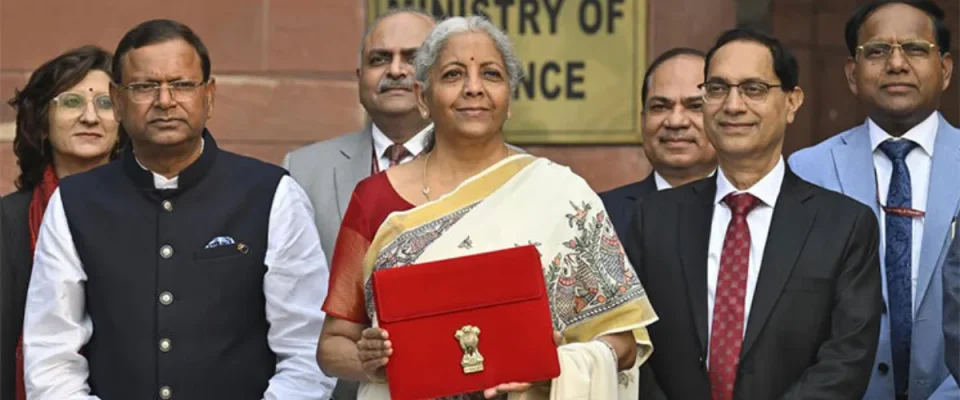
The Indian apparel and textile sector is closely watching the Union Budget for 2026–27, which Finance Minister Nirmala Sitharaman is set to present in Parliament on 1st February. Exporters and manufacturers are navigating global economic uncertainty, weaker demand in key overseas markets, and the lingering impact of higher US tariffs.
In FY25, the Budget allocated ₹5,272 crore (USD 574 million) to the textile sector, extended the Production Linked Incentive (PLI) scheme for man-made fibres and technical textiles, and continued funding for initiatives such as PM MITRA parks and the SAMARTH skilling programme. These measures aimed to strengthen domestic manufacturing, modernize infrastructure, and improve global competitiveness under the Make in India framework.
Sanjay Jain, Group CEO of PDS Limited, highlighted the need for targeted fiscal support for apparel clusters to protect employment, sustain exports, and preserve India’s manufacturing base. He stressed accelerating on-ground execution of PM MITRA parks to build a globally competitive, integrated textile manufacturing ecosystem, and emphasized productivity-linked skilling and supervisory capabilities under the SAMARTH programme as critical to maintaining competitiveness.
Sanjay Gandhi, Group CFO of Pearl Global Industries, said progress on Free Trade Agreements (FTAs) with key markets such as the UK and EU could be a meaningful catalyst by addressing long-standing duty disadvantages. He added that policy continuity for export-linked schemes, faster duty remission, and sustained support for integrated textile infrastructure would enable companies to invest confidently in capacity, compliance, and workforce development. A stable policy environment, combined with improvements in logistics efficiency and skilling, would help Indian exporters capture a larger share of global sourcing as demand recovers.
Suketu Shah, CEO of Vishal Fabrics Ltd, urged the Union Budget 2026 to prioritize modern technology and advanced machinery to enhance efficiency and scale. He called for higher allocations for R&D, stronger support for the cotton value chain, measures to control garment imports, streamlined export processes via platforms like BharatTradeNet, improved access to export credit, and progressive labour policies to consolidate India’s position in the global textile value chain.
From a retail perspective, Anupam Bansal, Executive Director of Liberty Shoes, noted that measures to enhance disposable incomes could revive consumption, central to retail growth. He added that affordable financing, easier credit access, and relief on operating costs would strengthen the retail ecosystem and encourage geographic expansion. Continued support for the Make in India framework, he said, would help Indian manufacturers and home-grown brands scale sustainably and compete globally.
Vishal Mehra, Co-founder of Stylox Fashion, highlighted the need for rationalization of GST rates on clothing, particularly in the mid-price segment. He called for a simpler and uniform GST framework to allow organized brands to price competitively, better counter the unorganized sector and imports, and support sustainable manufacturing. Mehra also stressed the importance of accessible working capital for MSMEs, government backing for local material sourcing, skill development, and retail expansion in Tier-2 and Tier-3 cities.
Balaji Kannan, CFO of sustainable fashion brand VIRGIO, noted the budget presents an opportunity to accelerate sustainable, consumption-led growth. He called for enhanced working capital access through MSME schemes, increased allocations under a potential PLI 2.0 for textiles, and policy support for technology adoption and zero-waste manufacturing. Cotton import duty exemptions and faster implementation of PM MITRA parks were also highlighted as priorities.
Arjun Gupta, Founder and CEO of KragBuzz Sports, said the budget should focus on incentives for domestic manufacturers, including tax benefits and reduced regulatory burdens, to enable high-quality, affordable sportswear production. Tejasvi Madan, Founder of athleisure brand Beyond Bound, emphasized practical policy support for manufacturing-led and D2C start-ups, including easier working capital access, lower interest rates, simplified compliance, a uniform GST structure, women-led enterprise incentives, and support for sustainable and ethical manufacturing. Strengthening MSMEs and supply-chain infrastructure, she said, is key to long-term growth for India’s fashion entrepreneurs.
As the sector awaits the Union Budget, stakeholders broadly agree that a balanced mix of export support, infrastructure development, skilling, tax rationalization, and improved access to finance will be essential to help the apparel and textile industry navigate current challenges and capitalize on emerging global opportunities.
News Courtesy : Apparel Resources