

Bangladesh Textile Mills Association (BTMA) urges the government to extend export cash incentives for three years to support the textile sector amid rising cost pressures.
The Bangladesh Textile Mills Association (BTMA) has formally urged the government to extend the export cash incentive on textile export receipts by three years, warning that the support is critical for the survival of the country’s export-oriented textile industry amid intensifying economic challenges.
In a letter to the finance secretary, signed by BTMA president Showkat Aziz Russell, the association said the sector was under severe strain due to the sharp depreciation of the taka, geopolitical disruptions, rising production costs and inadequate supplies of power and gas. These factors, it said, have significantly eroded profitability and reduced capacity utilization across textile mills.
The export cash incentive provided under Bangladesh Bank’s Foreign Exchange (FE) Circular No. 28, which is currently valid until 31st December 2025, has been a crucial support mechanism for the industry, according to the association. BTMA said the incentive has helped cushion losses stemming from higher import costs for raw materials and slower export realization cycles, and argued that extending the scheme until December 2028 is essential to maintain export competitiveness.
The association outlined a combination of domestic and external pressures facing the industry, including prolonged geopolitical conflicts such as the Ukraine–Russia war and the Israel–Palestine crisis, a global economic slowdown, a sharp increase in gas prices and a 70% rise in workers’ wages. It also pointed to persistent power and gas shortages, which have prevented many mills from operating at full capacity, leading to rising unsold yarn inventories and production cutbacks.
BTMA highlighted the strategic importance of the textile sector, which has attracted investments of about US $ 23 billion, making it the largest private-sector investment block in Bangladesh. The sector supplies roughly 70% of raw materials to the ready-made garment industry and contributes around 30% of the country’s foreign exchange earnings, forming part of a combined 85% share of export receipts alongside apparel.
In a separate appeal to Bangladesh Bank governor Ahsan H. Mansur, the association sought an extension of the import credit facility for raw materials until 31st December 2026. Existing facilities, provided under FE Circular No. 08 and reaffirmed by FE Circular No. 27, are set to expire at the end of 2025, while the current 180-day credit period was described as insufficient.
According to textile millers, the full production and export cycle—from importing cotton to receiving export proceeds—typically takes between 270 and 300 days, making a 360-day credit period more realistic to sustain liquidity and avoid production disruptions. Without such an extension, the association warned, the export-oriented textile supply chain could face serious strain.
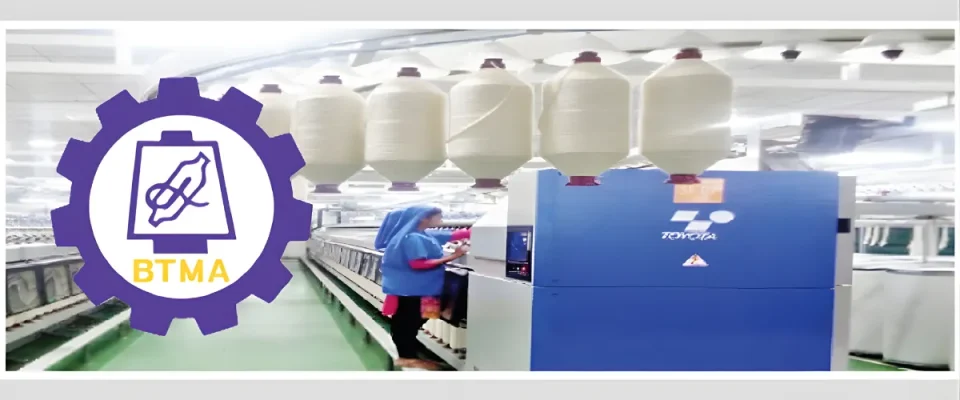
BTMA represents 1,869 member mills across spinning, weaving, dyeing, printing and finishing segments. Its calls for both an extended cash incentive and longer import credit facilities underscore what it describes as an urgent need for policy support as global trade conditions tighten and domestic costs continue to rise.
As the government prepares the upcoming national budget and trade strategy, BTMA’s proposals are expected to feature prominently in discussions on sustaining Bangladesh’s textile competitiveness beyond the current fiscal year.
News Courtesy : Apparel Resources