
South Gujarat’s textile industry continues to play a pivotal role in Gujarat’s industrial economy, contributing over 25% to the state’s GDP, according to the state government.
To further accelerate regional growth, the government has announced that the Vibrant Gujarat Regional Conference (VGRC) will take place in Surat on May 1–2, 2026. The event is expected to serve as a key platform for attracting large-scale investments, particularly in textiles, while strengthening connections between global buyers and local manufacturers. It will also encourage the adoption of advanced technologies and innovation across the sector.
Officials highlighted that Surat and the broader South Gujarat region remain central to the state’s economic momentum. Surat alone accounts for nearly 30% of global fabric production and contributes around 65% to India’s man-made fibre segment. The city produces approximately 60 million metres of fabric daily, supported by more than 600 processing units and an extensive network of power looms.
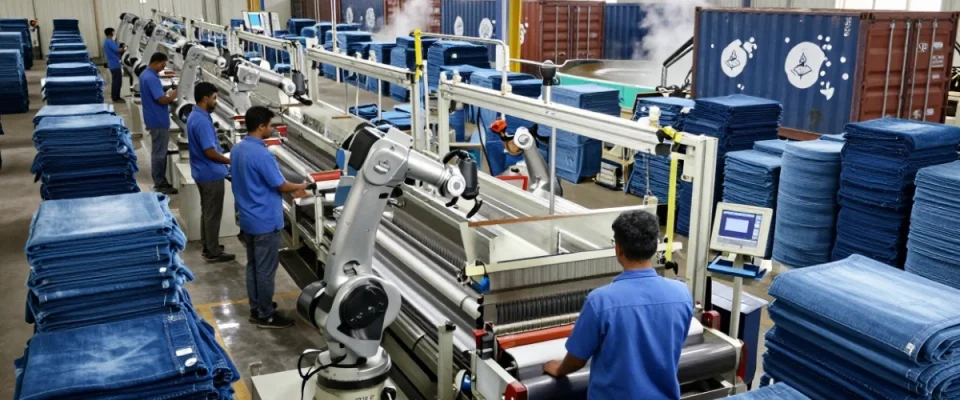
Surat has also developed into a major manufacturing hub, producing everything from sarees and national flags to premium fashion garments. Its strength lies in a well-integrated supply chain and advanced production capabilities, with goods transported efficiently through a robust logistics network of over 500 transporters via road, rail and air.
The government further emphasised that ongoing infrastructure and policy initiatives are expected to boost the sector’s growth. Key projects such as the bullet train, coastal road developments and the PM MITRA Park in Navsari are seen as transformative for the textile industry.
Under the Gujarat Textile Policy 2019, the sector has received substantial financial backing, particularly in Surat district. Subsidies worth Rs. 2,325.87 crore (approximately US $246 million) have been disbursed so far. Additional incentives include interest support of up to 6% for new and expanding units, electricity concessions ranging from Rs. 2 to Rs. 3 per unit for weaving and knitting operations, and capital investment assistance for technical textiles.
The policy also supports the development of textile parks and Common Effluent Treatment Plants (CETPs), aimed at improving environmental compliance. These measures have helped modernise Surat’s textile industry, making it more sustainable and globally competitive.