


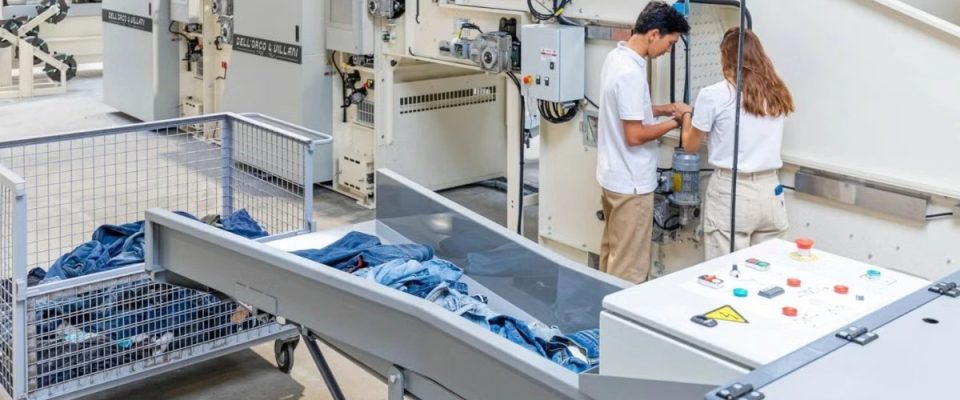
Artificial Intelligence is rapidly reshaping the textile recycling landscape in China, with innovative machines now capable of sorting garments at speeds far beyond human capability.
These AI-powered systems leverage advanced sensors, computer vision, and machine learning algorithms to accurately identify different fabric types, colors, and blends, enabling precise and efficient segregation of textile waste.
Traditional textile sorting has long relied on manual labor, which can be slow, inconsistent, and costly. The introduction of AI-driven automation significantly reduces human error while increasing throughput, allowing recycling facilities to process large volumes of discarded clothing in a fraction of the time. This not only improves operational efficiency but also enhances the overall quality of recycled materials.
One of the key advantages of these intelligent systems is their ability to detect complex fabric compositions, including mixed fibers that are often difficult to separate manually. By ensuring accurate classification, the technology helps maximize material recovery rates and supports the production of higher-quality recycled fibers, which can be reused in new textile manufacturing.
The adoption of AI in textile recycling also aligns with China’s broader sustainability goals, particularly in promoting a circular economy. With the growing concern over textile waste and environmental pollution, such innovations play a crucial role in reducing landfill dependency and minimizing the carbon footprint of the fashion and textile industry.
Moreover, this advancement is expected to inspire similar developments across global markets, as countries and industries look for smarter ways to manage post-consumer textile waste. The integration of AI into recycling processes demonstrates how digital transformation can drive both economic and environmental benefits.
As technology continues to evolve, AI-powered sorting systems are set to become a cornerstone of modern recycling infrastructure. By combining speed, accuracy, and scalability, these machines are paving the way for a more sustainable and resource-efficient textile industry worldwide.