


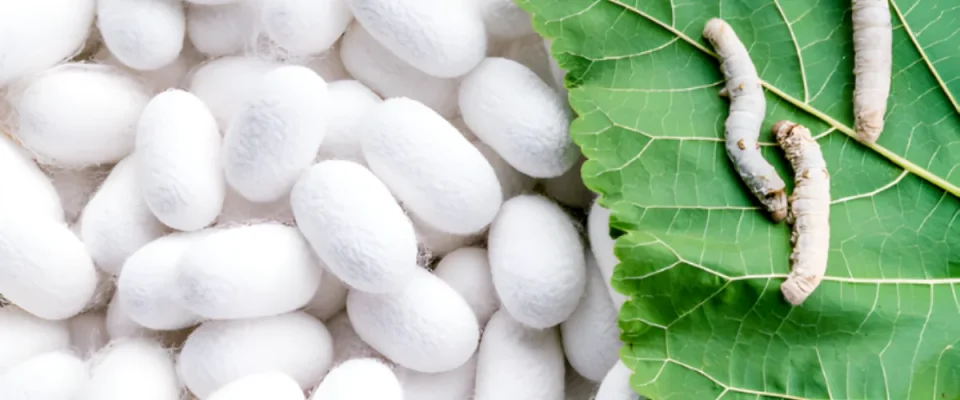
India’s silk production and employment have increased sharply with the expansion of sericulture, strengthening rural livelihoods and the country’s textile value chain, says the Textiles Ministry.
India has consolidated its position as the world’s second-largest producer of silk, with the sericulture sector recording sustained growth in production, productivity, prices and employment during the Year of Textile Reforms, the Ministry of Textiles said.
Data released by the ministry show a significant expansion between 2013–14 and 2024–25. Raw silk production increased by 55% to 41,121 metric tonnes from 26,480 metric tonnes, while productivity rose by 16.75% to 112 kg per hectare from 96 kg per hectare.
Prices also improved sharply over the period. Mulberry cocoon prices climbed by 46%, rising to Rs. 560 (US $ 6) per kg in 2024–25 from Rs. 384 (US $ 4) per kg in 2013–14, strengthening farm-level returns across major silk-producing regions.
Employment growth emerged as another key outcome of the sector’s performance. The sericulture workforce expanded by nearly 24%, increasing from about 78 lakh people in 2013–14 to around 98 lakh in 2024–25. The ministry said this highlights the sector’s role in supporting rural livelihoods and expanding women’s participation in economic activity.
Within the broader national growth trend, Meghalaya has gained prominence through its traditional Eri silk industry. The Geographical Indication (GI) recognition of Ryndia was identified as one of the sector’s notable achievements in 2025. In Meghalaya, Eri silk production is largely community-based, providing household income and employment, particularly for women involved in cocoon rearing, spinning and weaving.
The ministry said the GI tag has enhanced market visibility and value addition for Ryndia, enabling better pricing, organized branding and access to wider markets beyond the state. The recognition has also reinforced the sustainable and eco-friendly production practices traditionally associated with Eri silk.
The Ministry of Textiles said the inclusion of Ryndia among the sector’s success stories reflects the government’s emphasis on integrating traditional and region-specific textiles into India’s global silk production framework, while ensuring that growth delivers tangible livelihood benefits at the grassroots level, including in states such as Meghalaya.
News Courtesy : Apparel resources