


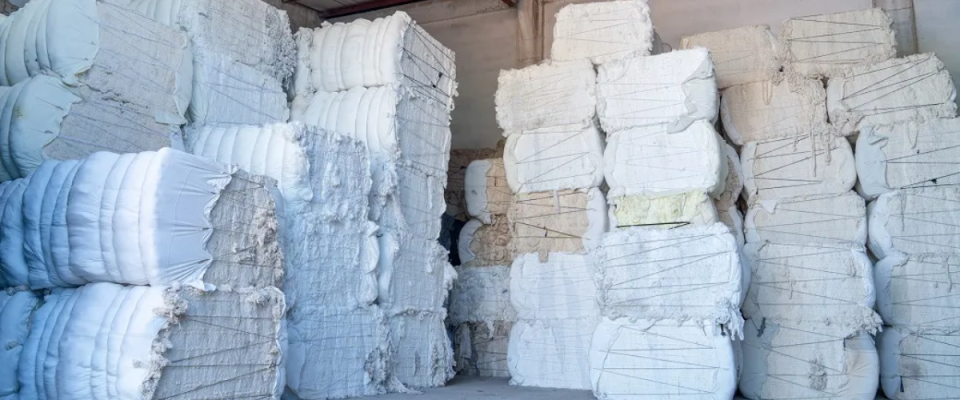
Cotton supply in India is tightening after the government procured 38 lakh bales at MSP, impacting market availability, prices, and the textile value chain.
The Indian government has procured 230.23 lakh quintals of seed cotton (kapas) until December 19, according to procurement figures released by the Cotton Corporation of India (CCI). This translates into 38.70 lakh bales of 170 kg cotton procured over the first 80 days of the 2025–26 marketing season, which began on October 1.
CCI has been purchasing cotton at the minimum support price (MSP), which is currently higher than prevailing market prices. As a result, the domestic market is facing elevated cotton prices amid CCI’s procurement and subdued demand from downstream industries. CCI’s aggressive procurement in the ongoing 2025–26 season is creating a paradox for the downstream textile industry.
While MSP-backed buying has supported farm-gate prices, the large volume of cotton moving into CCI warehouses has reduced free-market availability, even as demand for cotton yarn, fabrics and garments remains weak. According to CCI procurement figures received by the domestic industry, the corporation had procured 230.23 lakh quintals of kapas as of December 19, 2025.
At an average lint recovery of 35 per cent, this translates into roughly 38.70 lakh bales. This quantity has effectively been withdrawn from open circulation, tightening near-term availability for spinners and ginners. Industry sources point out that the timing of this withdrawal of cotton from the open market is critical. Yarn offtake remains sluggish, fabric inventories are comfortable, and garment demand (both domestic and export-led) continues to be cautious.
In such a demand environment, higher cotton prices driven by restricted availability are exerting pressure on spinning margins rather than supporting value-chain recovery. The impact is most visible in central and southern India, where procurement has been concentrated. Telangana and Maharashtra together account for more than 60 per cent of total CCI purchases so far, leaving mills in these regions increasingly dependent on warehouse-linked cotton rather than spot-market supplies.
Spinners maintain that while MSP procurement is necessary in distress years, large front-loaded buying without a clearly defined liquidation roadmap risks creating artificial tightness. With cotton locked in warehouses, prices fail to reflect downstream demand realities, widening the gap between raw material costs and finished goods realizations.
Industry stakeholders are therefore urging a phased and transparent release of CCI stocks, aligned with yarn and fabric demand cycles, to restore balance across the value chain and prevent prolonged stress on mill economics.
News Courtesy : Fibre2Fashion