
Jeanologia urges the textile industry to accelerate PP spray phase-out after potassium permanganate was added to the ZDHC Chemical Watchlist.
Potassium permanganate has now been added to the Chemical Watchlist of the ZDHC Foundation, placing one of the denim industry’s most hazardous finishing chemicals under heightened scrutiny. The move reinforces a transition that Jeanologia has been advocating for more than a decade — the complete elimination of PP spray from denim production.
For years, Jeanologia has highlighted the serious risks associated with PP spray, particularly its impact on worker health, shop-floor safety and the environment. Its inclusion on the ZDHC Chemical Watchlist signals growing industry recognition of concerns long evident in garment finishing units worldwide.
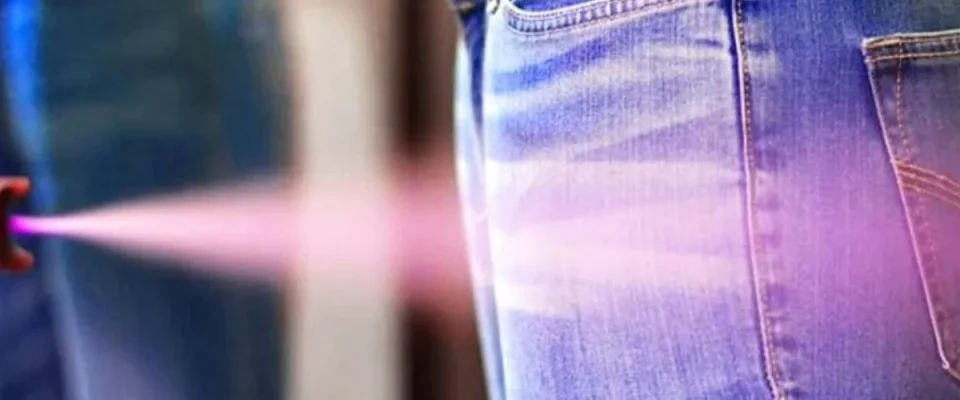
PP spray is widely used to create localized worn and vintage effects on denim. However, the process exposes operators to hazardous chemical micro-particles and presents significant occupational health risks. Despite increasing awareness and the availability of safer alternatives, PP spray continues to be used in certain regions, affecting millions of workers globally, according to industry estimates.
Jeanologia eliminated PP spray from its own technology solutions in 2015, becoming the first provider to introduce a scalable industrial alternative using laser-based finishing. The company replaces PP spray through its laser technology integrated with the Light Bright tool and G2 Ozone systems. Together, these solutions deliver authentic vintage aesthetics without chemical application, while offering full digital control, safer working environments and consistent industrial performance.
The transition away from PP spray is further supported by Jeanologia’s Environmental Impact Measuring (EIM) platform. In its Innovations and Challenges in Denim Finishing 2024 report, EIM identifies potassium permanganate as one of the remaining high-risk processes in garment finishing and stresses the urgent need for safer, low-impact alternatives — particularly laser-based technologies.
“PP spray is a practice that belongs to the past,” said Carmen Silla, Global Marketing Director at Jeanologia. “This is not simply a compliance issue. It’s about protecting people and transforming how denim is produced. The technology to eliminate PP spray already exists and is fully scalable. What the industry needs now is the determination to move forward.”
Over the past decade, Jeanologia has progressively replaced some of the most hazardous denim finishing methods with eco-efficient technologies. The company was the first to eliminate sandblasting and has developed viable alternatives to stone washing, manual scraping and PP spray. Its laser and G2 Ozone technologies are now used globally, enabling brands to achieve desired aesthetics while improving worker safety, reducing chemical dependency and lowering water consumption — all with measurable environmental impact.
As transparency requirements, ESG reporting and chemical management standards continue to tighten, early adoption of safer technologies is increasingly seen as a competitive advantage. Jeanologia is urging brands, laundries and manufacturers to accelerate the shift toward chemical-free denim finishing.
According to the company, the tools are already in place, the transition is achievable, and the moment to act has arrived. The phase-out of PP spray, once viewed as aspirational, is now an established industrial reality.