


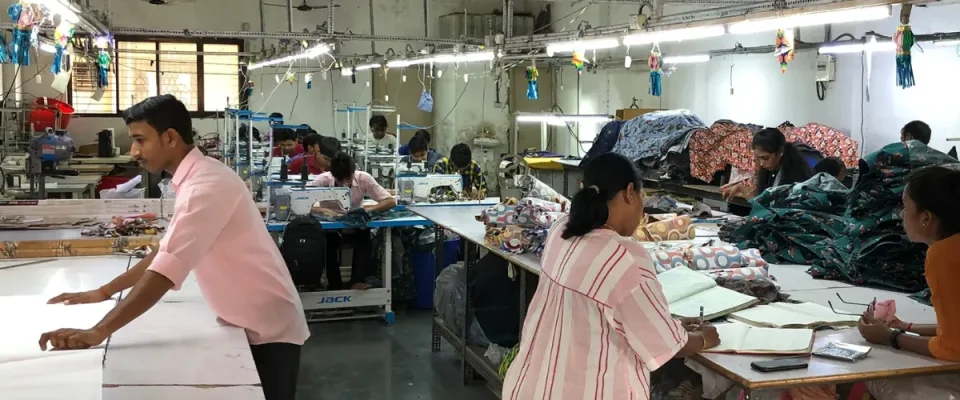
India remains well-positioned despite global tariff changes, says CITI Secretary General, highlighting resilience of the textile industry.
India continues to remain well placed in the US textile and apparel market despite recent changes in the American tariff framework, according to Chandrima Chatterjee, Secretary General of the Confederation of Indian Textile Industry (CITI).
Her remarks come after the US Supreme Court struck down a significant portion of President Donald Trump’s earlier tariff measures, ruling that the legislation cited did not grant the President authority to impose those import duties. The ruling has introduced a new phase in US trade policy, following which the administration announced a uniform 10 per cent global tariff applicable across trading partners.
Despite the policy shift, Trump defended the India–US trade arrangement, describing it as fair and reiterating that the agreement does not impose reciprocal duties on the United States. Chatterjee said the Indian textile industry is closely evaluating the implications of the recent developments on the proposed India–US Bilateral Trade Agreement (BTA). She noted that India had earlier enjoyed a marginal tariff advantage over certain competing countries.
“We were at around 18 per cent, while some competitors were at 19 or 20 per cent. Even if that marginal advantage narrows under the new global tariff, India remains in a strong position,” she said. Chatterjee stressed the importance of continuing bilateral negotiations, adding that the broader benefits of a BTA go beyond tariff relief. These include enhanced technology exchange, improved investment flows and deeper collaborations that can support value-led growth in textile and apparel exports to the US market.
Expressing confidence in the sector’s outlook, she said recent developments have brought greater clarity. “The trajectory has been positive. Since tariffs came down to 18 per cent earlier, conditions have been favourable, and the US continues to be a very strong market for Indian textiles,” she observed.
She further highlighted that the US accounts for nearly 30 per cent of India’s textile exports, underlining its strategic importance. With uncertainty easing following the Supreme Court ruling, Chatterjee said exporters should focus on consolidating and expanding their presence in the US.
“The policy environment is now more predictable. This gives Indian exporters the confidence to strengthen their base and pursue further growth in the US market,” she added.