

Textile Sector to Become Uttar Pradesh’s New Industrial Strength: CM Yogi Adityanath
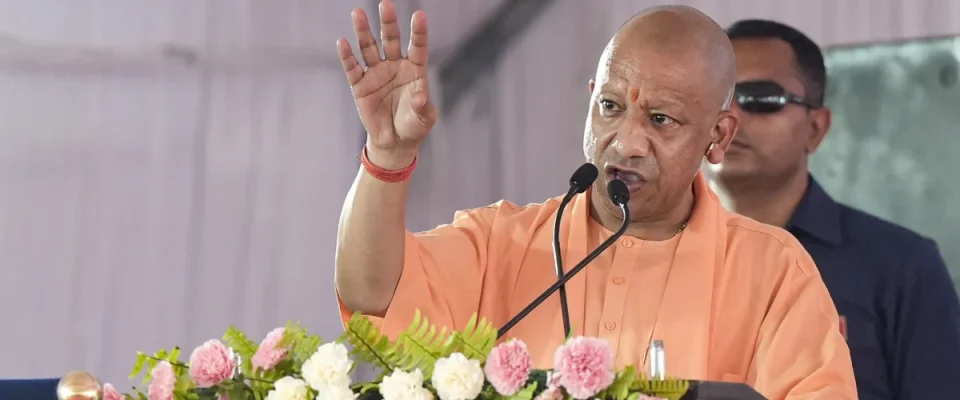
Uttar Pradesh is positioning its textile industry as a major driver of industrial growth, with the state receiving new investment proposals worth Rs 5,196 crore in the sector. Inaugurating the UP Textile Conclave in Lucknow on Tuesday, Uttar Pradesh Chief Minister Yogi Adityanath said the textile industry would become the state’s new industrial strength and play a key role in creating employment and expanding exports.
Adityanath said Uttar Pradesh has a strong combination of traditional heritage, skilled workers, human resources, industrial capabilities, entrepreneurship and access to India’s largest consumer market. With one of the world’s youngest workforces, the state has the potential to emerge as a global textile hub by leveraging these strengths, he added.
The state government is focusing on developing the complete textile value chain, from fibre to yarn, yarn to fabric, fabric to garments, garments to brands and ultimately global markets. During the conclave, the chief minister launched the UP Tex Mitra portal and inaugurated the Hathkargha Bunkar Samriddhi Yojana. Investment proposals worth Rs 5,196 crore were formalised through memoranda of understanding, while letters of comfort worth Rs 163 crore and subsidy support of Rs 60 crore were distributed.
Highlighting Uttar Pradesh’s long textile heritage, Adityanath said the state’s association with textiles dates back thousands of years, with references to silk textiles from Kashi found in ancient Indian literature. He pointed to Varanasi’s silk sarees, Bhadohi’s carpets, Lucknow’s chikankari, Bareilly’s zari work, Kanpur’s textile ecosystem and Meerut’s potential in technical textiles as examples of the state’s diverse textile capabilities.
The state currently has around 200,000 handlooms and more than five lakh powerloom weavers, which the chief minister described as the backbone of the sector. Textile production also remains Uttar Pradesh’s largest source of employment after agriculture, making the industry strategically important for the state’s economic and social development.
Uttar Pradesh ranks third in India in fabric manufacturing and contributes around 13-14 per cent of the country’s total fabric production. Over the past six years, the state’s exports of textiles, garments and handicrafts have increased by nearly 56 per cent, making Uttar Pradesh the country’s fourth-largest exporting state in the sector. In FY26, Gautam Buddha Nagar emerged as India’s second-largest exporting district, recording exports of more than Rs 21,000 crore.
The chief minister also highlighted the national ambition of building a $350 billion textile and apparel economy and achieving $100 billion in textile and apparel exports by 2030. Uttar Pradesh, he said, would contribute significantly to these targets by utilising its manufacturing base, skilled workforce and infrastructure.
The state’s One District One Product (ODOP) programme has further strengthened the identity of textile and handloom products from more than 35 districts. Seventeen textile products from Uttar Pradesh have received Geographical Indication (GI) tags, helping preserve traditional crafts while creating opportunities for wider domestic and international markets.
Adityanath also emphasised the growing role of women in the sector, noting that hundreds of thousands of women are becoming economically self-reliant through textile-related activities and self-help groups. The state’s young workforce could provide additional momentum to the sector’s expansion, he said.
Beyond conventional textile manufacturing, Uttar Pradesh is also focusing on technical textiles, which are increasingly being used in defence, healthcare, agriculture and sports. The state aims to strengthen its presence in this emerging segment alongside its established traditional textile industries.
Infrastructure initiatives such as the PM MITRA Park and Sant Kabir Textile Park are expected to support this transformation. Land has been reserved for textile-related projects in Varanasi, Amroha, Bareilly, Sant Kabir Nagar and Bijnor, while the process of identifying land for textile and apparel parks has also begun in Sitapur, Mau, Kanpur, Jhansi and Rae Bareli. Noida is being developed as an apparel city as Uttar Pradesh seeks to build a stronger and more integrated textile ecosystem.
With new investments, expanding infrastructure, a large skilled workforce and a diverse base of traditional and modern textile industries, Uttar Pradesh is aiming to strengthen its position as a major textile and apparel manufacturing hub in India and expand its presence in global markets.