

NBR Tightens Yarn Import Rules Under Bond Facility
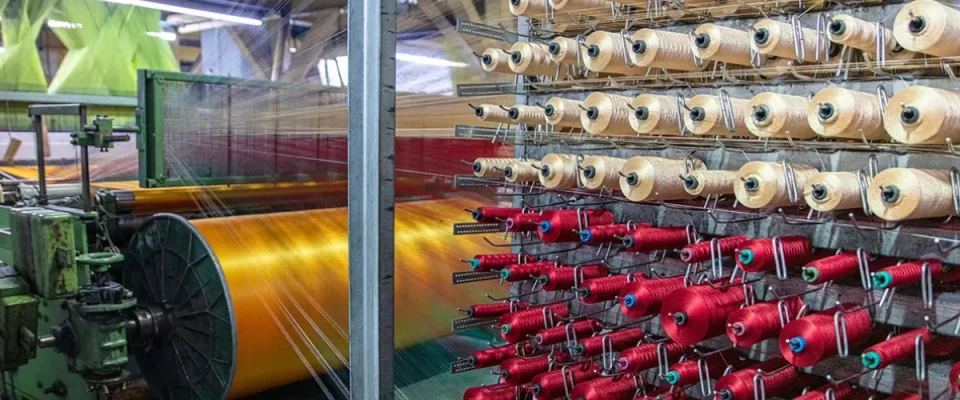
Bangladesh’s National Board of Revenue (NBR) has tightened regulations governing duty-free yarn imports under the bond facility for export-oriented readymade garment factories, suspending the facility for imports of 10–30 count cotton yarn.
Under a new conditional arrangement, exporters will still be able to import yarn in this count range by providing bank guarantees. The guarantees will be released once export proceeds are repatriated. Yarns between 10 and 30 count are among the most widely used varieties in Bangladesh’s textile and garment industry, accounting for around 60 per cent of total yarn imports.
The NBR issued a general order on Monday following a decision taken at the first meeting of an inter-ministerial committee formed to address challenges facing the textile industry. The meeting, held on August 20, was chaired by Commerce Minister Khandakar Abdul Muktadir.
According to the revenue board, the measure is intended to protect Bangladesh’s domestic textile and spinning industries while ensuring that genuine exporters continue to have access to essential raw materials. Textile millers welcomed the decision, saying it could strengthen the local spinning sector, reduce misuse of the bond facility and potentially increase government revenue from yarn imports.
The Bangladesh Textile Mills Association (BTMA) said the move could help revive local spinning mills, increase domestic value addition, conserve foreign exchange and generate employment by encouraging greater use of locally produced yarn.
Garment exporters, however, have strongly opposed the decision, arguing that the additional financing requirements associated with bank guarantees would increase production costs and weaken the competitiveness of Bangladesh’s apparel industry.
The Bangladesh Garment Manufacturers and Exporters Association (BGMEA) and the Bangladesh Knitwear Manufacturers and Exporters Association (BKMEA) jointly wrote to the commerce ministry on Tuesday, calling for the immediate withdrawal of the measure. The associations said the decision was taken without adequate consultation with the apparel industry and could disrupt exports while sending a negative signal to international buyers.
The garment industry also raised concerns about potential market concentration in yarn supply. The associations alleged that a vested group could be seeking to establish a monopoly in the yarn market at a time when Bangladesh is facing weak garment export orders and rising domestic yarn prices.
Industry leaders also questioned the decision-making process. They said the minutes of the inter-ministerial committee meeting contained a proposal requiring export-oriented industries to source at least 50 per cent of their yarn domestically and import the remaining 50 per cent. According to the garment associations, this issue was neither included in the meeting agenda nor discussed during the meeting.
BKMEA President Mohammad Hatem said the decision was particularly concerning as the government and the readymade garment sector were already engaged in discussions on possible changes to the policy governing knit fabric imports.
NBR officials said the issue had been under discussion for some time with the commerce ministry, the Bangladesh Trade and Tariff Commission and other stakeholders. They said the objective was to strengthen domestic industries while preventing misuse of the bond facility.
According to NBR officials, the commerce ministry had recommended the measure during the previous interim government’s tenure, but it was not implemented at that time. The proposal was later finalised by the inter-ministerial committee formed under the current government.
Razeeb Haider Munna, a former BTMA director, said the decision followed a high-level government directive and considered its potential impact on revenue collection as well as backward and forward linkage industries. He said the measure could strengthen local spinning mills by increasing demand for domestically produced yarn.
Munna also said the initiative could support Bangladesh in meeting European Union and United States requirements related to two-stage transformation and 40–60 per cent value addition. These requirements could become increasingly important for maintaining market access following Bangladesh’s graduation from Least Developed Country status and its transition towards the GSP-plus regime.
Under the new arrangement, exporters seeking the release of their bank guarantees will have to submit a certificate from the relevant trade body, including BGMEA, BKMEA or BTMA. Consequently, bonded export-oriented factories importing raw materials against bank guarantees will now have to follow a process similar to that applicable to non-bonded factories.
BGMEA President Mahmud Hasan Khan and BKMEA President Mohammad Hatem have both called for the immediate withdrawal of the new yarn import restrictions, highlighting concerns over their potential impact on export competitiveness and the wider apparel supply chain.