


Tirupur Rewires Its Growth Playbook Amid Global Uncertainty
How India’s Knitwear Capital Is Reinventing Itself Through Diversification, Innovation, and Strategic Expansion
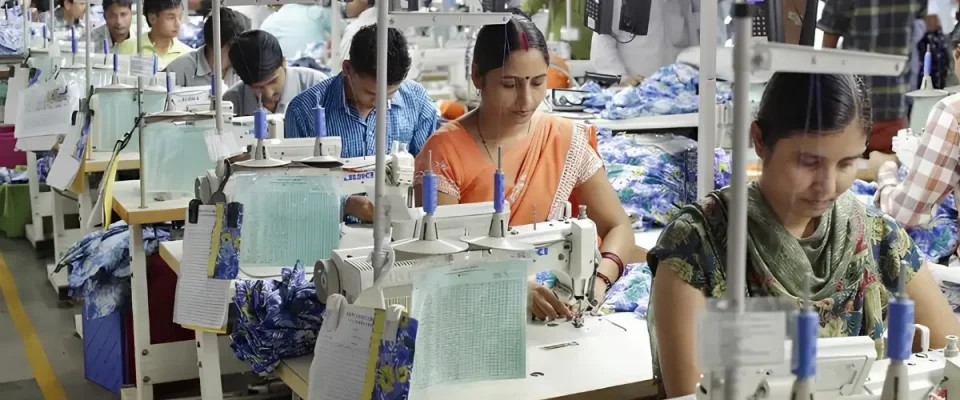
Global trade continues to navigate a period of uncertainty, shaped by geopolitical tensions, fluctuating tariffs, and shifting sourcing strategies. Yet, in the heart of India’s knitwear industry, Tirupur is charting a different course. Rather than slowing down, the country’s largest knitwear manufacturing hub is embracing change with renewed confidence, investing in expansion, product innovation, and market diversification to secure its long-term growth.
While the recent tariff reset announced by the Trump administration has helped improve global market sentiment, industry leaders believe Tirupur’s resilience is rooted in much deeper structural strengths. Manufacturers are no longer relying solely on traditional export markets but are expanding into new geographies, adopting modern manufacturing practices, increasing domestic sales, and shifting towards value-added products made from man-made fibres (MMF) and blended fabrics.
A Global Knitwear Powerhouse
Tirupur remains India’s most influential knitwear export cluster, contributing more than 60% of the country’s total knitwear exports. During the last financial year, the cluster recorded exports worth ₹44,747 crore (approximately US$4.75 billion), underlining its critical role in India’s textile economy.
Its international customer base is equally diversified. Around 35% of exports are shipped to the European Union, another 35% to the United States, while 10% reach markets across the Middle East and Canada. This balanced export portfolio has enabled manufacturers to navigate market fluctuations more effectively than many competing sourcing destinations.
Domestic Market Becomes a Strong Growth Engine
Beyond exports, India’s expanding consumer market is creating significant opportunities for Tirupur manufacturers. Domestic knitwear sales have reached nearly ₹27,000 crore (US$2.84 billion) and continue to grow steadily as rising disposable incomes fuel demand for quality apparel.
Many companies are actively increasing their presence in the Indian retail market, viewing domestic business as an effective strategy to balance export volatility while strengthening long-term revenue stability.
Expansion Beyond Traditional Manufacturing
Across the cluster, manufacturers are making substantial investments in capacity expansion, automation, and modernization.
New spinning, processing, and garmenting facilities are being established, while several companies are also expanding internationally through joint ventures and overseas production partnerships. These investments are designed not only to increase production capacity but also to improve operational efficiency, shorten lead times, and enhance competitiveness in the global apparel market.
Diversification Drives the Next Phase of Growth
The industry is also witnessing a significant shift in product strategy. Manufacturers are expanding beyond conventional cotton knitwear into high-value categories such as athleisure, bonded garments, seamless apparel, innerwear, and performance clothing.
At the same time, many exporters are accelerating their transition from pure cotton to MMF and blended fabrics, reflecting changing global fashion trends and growing demand for functional, durable, and sustainable textiles.
Adapting to Changing Buyer Behaviour
Global sourcing patterns are evolving rapidly. Large-volume orders are increasingly being replaced by smaller, more frequent purchases as brands seek greater flexibility and lower inventory risks.
Tirupur manufacturers have responded by building agile production systems capable of handling multiple styles, shorter production runs, and faster delivery schedules. Advanced planning, common fabric sourcing, and flexible manufacturing are enabling companies to remain competitive despite increasing order fragmentation.
Challenges Remain, But Confidence Stays Strong
Manufacturers serving Middle Eastern markets continue to monitor geopolitical developments that have disrupted logistics and delayed payments in certain regions. However, most industry leaders view these challenges as temporary.
Meanwhile, India’s growing network of Free Trade Agreements (FTAs), combined with global buyers looking to diversify sourcing away from traditional manufacturing hubs, is expected to create fresh opportunities for Tirupur exporters in the coming years.
The Road Ahead
Tirupur’s transformation extends well beyond expanding factory floors. The cluster is redefining its business model by investing in technology, diversifying products, strengthening domestic sales, embracing sustainability, and building greater supply chain resilience.
As global apparel sourcing enters a new era, Tirupur is positioning itself not merely as a manufacturing destination but as a flexible, innovation-driven textile ecosystem capable of adapting to changing market dynamics. Its ability to evolve in the face of uncertainty reinforces its status as one of the world’s most resilient and competitive knitwear hubs, setting the stage for sustained growth in the years ahead.