
Our biggest strength is to keep innovating according to the changing dynamics of the market and fulfill our commitment to deliver complete satisfaction and exceptional value. Adequate quality systems are in place right from the procurement of raw material to the dispatch of the final product.
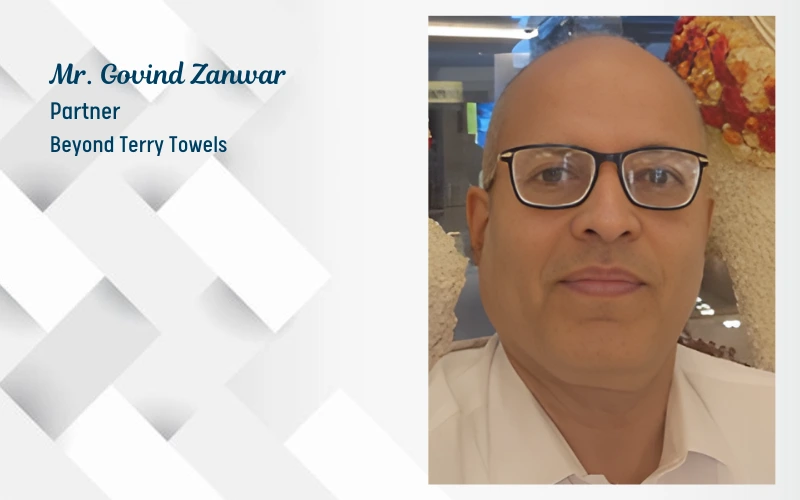
We strive to achieve improvement across the following key pillars of our business: Customer satisfaction, product innovation, premium quality products, and customer relationships. For years, we have been known for our great customer service and superior quality of production at affordable prices. A family Man who is a business owner that runs for 50+ years not just based on business objectives but for the zeal & passion of producing superior quality products from Solapur with an ambition of taking it on the global map.
Texmart : How did the founding vision evolve?
Govind Zanwar : The founding vision of Beyond Terry Towels evolved from a conventional textile manufacturing approach into a more eco-friendly innovation-driven and customer-centric model. Initially focused on producing standard terry towels, the company gradually recognized the importance of growing demand for differentiated products in terms of quality, sustainability, and performance. This led to a strategic shift toward integrating advanced materials, modern machinery, global quality standards and intense passion towards sustainability. Over time, the company aligned its vision with international trends such as eco-friendly textiles and premium lifestyle products, transforming itself into a brand that emphasizes both functionality, innovation coupled with nature.
TM : What is the Role of generational leadership and research ?
GZ : Generational leadership played a crucial role in maintaining continuity while introducing modernization. Successive leadership brought fresh perspectives, particularly in adopting global practices and investing in R&D. Research became central to decision-making, helping the company adapt to changing consumer expectations like softness, hand feel, instance absorbency, durability, and sustainability. This blend of traditional expertise and modern research ensured resilience, allowing the company to remain competitive in both domestic and international markets.
TM : What is your Early investment in research and process innovation ?
GZ : Early investment in R&D enabled the company to experiment with new fibres, weaving techniques, and finishing processes. This led to improvements in absorbency, texture, hand feel and durability of towels. Process innovations such as optimized dyeing and finishing techniques reduced defects and improved consistency. These early efforts laid the foundation for continuous innovation, allowing the company to quickly adopt advanced materials like bamboo fibres, banana fibre, hemp fibre, Aloe vera and eco-friendly production technologies.
TM : How does the company achieve product differentiation in its towels?
GZ : Beyond Terry Towels differentiates its products through superior material selection, advanced weaving techniques, and strict quality control. The towels are designed to offer higher absorbency, faster drying, and enhanced softness compared to conventional products.
Attention to detail in finishing processes ensures durability and colour retention. The company also focuses on aesthetic appeal, offering a wide range of designs and textures suited for both domestic and export markets.
TM : What are the advantages of bamboo fiber?
GZ : Bamboo fibre yarn and other natural fibre yarns offers several advantages over traditional cotton. It has natural antibacterial, Anti-fungal properties, which help prevent Odor and maintain hygiene. Its microstructure enhances breathability and moisture absorption, making towels more comfortable to use.
Additionally, bamboo fibres are more sustainable as they require less water and fewer chemicals during cultivation. Research into blending bamboo with other fibres further enhances strength and longevity.
TM : What advanced manufacturing technologies are used in the production process?
GZ : The company utilizes advanced technologies such as soft-flow dyeing machines, automated stitching units, and modern testing laboratories. Soft-flow dyeing machines with lower liquor ratio ensures uniform colour distribution while reducing water and energy consumption.
Automated stitching improves precision and reduces human error, leading to consistent product quality. Testing labs evaluate parameters like GSM (grams per square meter), absorbency, Fastness to washing, Fastness to light and tensile strength, ensuring that every product meets international standards.
TM : How does the company identify and respond to market trends?
GZ : The company identifies market trends through continuous analysis of consumer preferences, competitor strategies, and global textile developments. Feedback from clients and distributors helps in understanding changing demands, such as eco-friendly products and premium finishes.
This information is then translated into new designs, materials, and product features, ensuring that the company stays relevant and competitive.
TM : What research methodologies are used to understand consumer needs?
GZ : Research methodologies include surveys, product testing, and material analysis to understand consumer expectations. For example, testing for quick-dry properties involves measuring moisture retention and evaporation rates. Skin sensitivity studies focus on hypoallergenic materials and chemical-free processing. These research efforts help in designing products that meet specific user requirements.
TM : What innovations are being made in eco-friendly materials?
GZ : Innovation in eco-friendly materials like bamboo and other natural fibres provides a strong competitive advantage. Such materials appeal to environmentally conscious consumers and meet global sustainability standards. Research into improving the performance of these materials ensures that they match or exceed traditional options in quality, making them commercially viable and attractive in international markets.
TM : Balancing affordability and quality
GZ : The company achieves this balance by optimizing production processes and sourcing raw materials efficiently. Bulk production and automation reduce costs, while strict quality control ensures premium output. This allows the company to offer high-quality products at competitive prices, enhancing customer satisfaction and export potential.
TM : How do customization and product diversity contribute to the company’s offerings?
GZ : Customization enables the company to cater to specific client needs, such as unique designs, sizes, and branding requirements. Product diversity ensures that the company can serve multiple market segments, from budget-friendly options to luxury products. This flexibility strengthens customer relationships and expands market reach.
TM : How does the company enhance process improvement and operational efficiency?
GZ : Continuous R&D in production processes helps identify inefficiencies and implement improvements. For example, optimizing dyeing cycles reduces energy, water, dyes, chemicals, and auxiliaries’ consumption while improved weaving techniques enhance fabric strength. These innovations lower production costs and increase overall efficiency, benefiting both the company and its customers.
TM : How is the company transforming its operations through modern technologies?
GZ : Modern technologies such as automated looms, advanced dyeing systems, and digital quality monitoring are transforming the Indian textile industry. These innovations improve productivity, reduce waste, and enhance product quality, making Indian manufacturers more competitive globally.
TM : How do automation and testing contribute to the company’s operations and quality control?
GZ : Automation ensures precision and consistency in manufacturing, while laboratory testing guarantees compliance with quality standards. Together, they reduce defects and improve reliability. Research in these areas continues to refine processes and introduce new quality benchmarks.
TM : How are sustainable technologies being integrated into textile production?
GZ : Sustainable technologies like effluent treatment plants, water recycling systems, and eco-friendly fibres are reshaping the industry. Research focuses on minimizing environmental impact while maintaining product quality, ensuring long-term sustainability.
TM : What growth opportunities exist in global markets for the company?
GZ : Indian towel manufacturers have significant opportunities in premium and sustainable segments. Increasing global demand for eco-friendly products positions India as a key exporter due to its strong textile base and cost advantages.
TM : What growth opportunities exist in global markets for the company?
GZ : Research in textile engineering can lead to the development of new materials, improved manufacturing techniques, and enhanced product performance. This drives innovation and supports industry growth.
TM : What role does textile engineering research play in the company’s development and innovation?
GZ : Emerging materials such as antimicrobial fabrics and smart textiles with embedded sensors could redefine the industry. These innovations enhance functionality and create new market opportunities.
TM : What sustainability practices does the company implement in its operations?
GZ : The company incorporates sustainability by using eco-friendly materials, reducing water usage, and minimizing chemical processes. These practices help reduce environmental impact while maintaining product quality.
TM : How does the company reduce its environmental impact?
GZ : Research focuses on developing processes that use less water and energy, as well as eco-friendly dyes and chemicals. These strategies contribute to a lower carbon footprint and more sustainable production.
TM : Consumer health and sustainability
GZ : Eco-friendly products like bamboo towels and other natural fibre towels are safer for consumers as they are free from harmful chemicals. At the same time, they reduce environmental impact, creating a balance between health and sustainability.