
Mexico’s Ministry of Culture, UNESCO, and artisans present the Atlas of Mexican Textile Art at “Original” and call for new contributions.
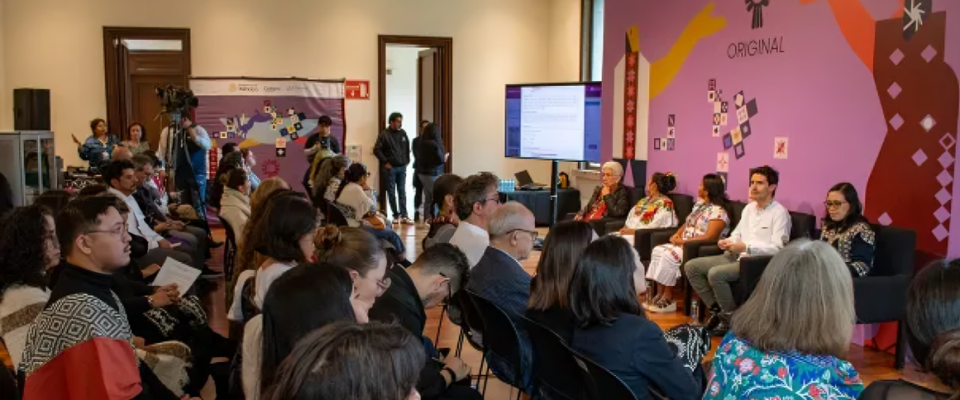
Mexico’s Ministry of Culture, UNESCO, and artisans presented the Atlas of Mexican Textile Art at the November 2026 edition of the national gathering “Original,” at Los Pinos Cultural Complex in Mexico City. Created by the Mexican artisan communities themselves, the Atlas is an online tool for consulting and permanently documenting the knowledge, techniques, and social and cultural elements linked to their creative diversity.
The Atlas is a living record of the many methods used to make and work fabrics and textiles. These methods are essential to producing clothing, home décor and other textile goods.
To build the initial record of techniques, mass in-person consultations were held at the 2025 “Original” national gatherings in Mexico City, Mérida and Tijuana. During the sessions, more than 500 artisans from 29 states and 205 municipalities across the country digitally recorded the techniques they use or know.
UNESCO, together with specialists in textile art and intangible cultural heritage, developed the methodology and its tools. They included a flexible, accessible, and efficient digital registration form that made it easier to organize the information provided directly by the artisans. UNESCO also developed an app so that participants could access the form by scanning a QR code with their phones and see the results live during the workshop sessions.
The more than 630 contributions received were later analyzed, and 144 techniques have been identified in the catalogue so far. The most frequently recorded techniques include backstrap loom weaving, cross-stitch, running stitch, treadle loom weaving and chain-stitch embroidery.
The Atlas also presents information by category (embroidery, weaving and dyeing) and subcategory (handweaving, decorative techniques, finishes, dyes and others). It also shows where each technique is practiced, how it is named (often in an Indigenous language), how it is made or used, and its links with other cultural practices, and how it is preserved.
The records highlight the family ties in the safeguarding and learning of textile techniques. 413 artisans said they learned from their mothers, and fewer from an aunt, grandmother, or father. Most said they pass their knowledge on to their daughters, followed by their sons, and 79 reported having students or apprentices.
The initial records in the Atlas offer a sample of the technical diversity of Mexican textile art. The platform remains open to new contributions from artisans and anyone interested in the field, including researchers. A team from Mexico’s Ministry of Culture will process these contributions.