


The government plans a network of around 1,000 trained local personnel and a Trade Connect platform to help businesses access export information, FTA opportunities and international markets.
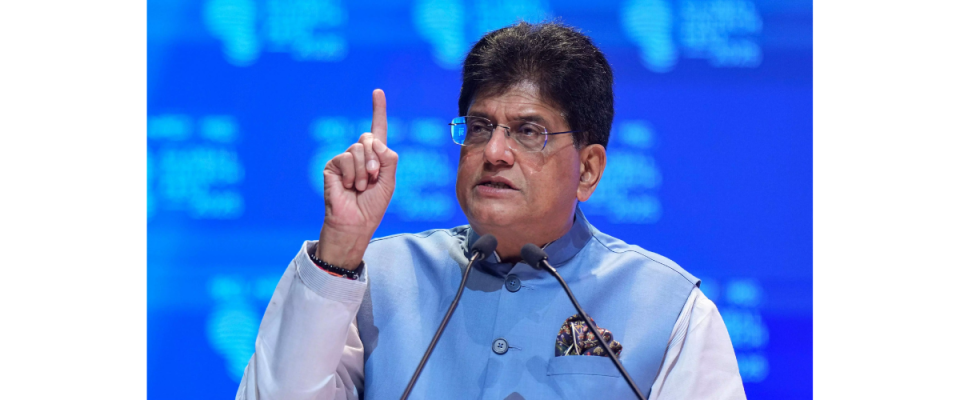
NEW DELHI, INDIA – India is planning to strengthen its export-support ecosystem through a combination of physical assistance and digital tools, with the government proposing a network of approximately 1,000 trained local personnel to support exporters at the district and state levels. The initiative was outlined by Union Commerce and Industry Minister Piyush Goyal during a recent industry stakeholder workshop.
The proposed personnel will receive training in regional languages and provide handholding support to existing and prospective exporters. They are expected to work through industry chambers and regional associations, helping businesses navigate export procedures and access relevant government support.
A key part of the government’s digital approach is the Trade Connect platform, which is being developed to provide exporters with product-wise and HSN-code-wise information. The platform is expected to provide details on destination-country tariffs, Free Trade Agreement opportunities and procedures for claiming FTA benefits.
The platform is also planned to incorporate digital and AI-enabled tools that can help businesses identify potential export opportunities and infrastructure gaps. This could provide exporters with more accessible information when evaluating new markets and planning international sales.
The stakeholder workshop, organised by the Department for Promotion of Industry and Internal Trade (DPIIT), focused on Ease of Doing Business reforms, FTA opportunities and trade-related challenges. Representatives from textiles, man-made fibres, pharmaceuticals, automotive and engineering, copper, logistics and other sectors participated in the discussions.
Textile and man-made fibre representatives raised issues concerning FTA utilisation, documentation, logistics, standards and testing infrastructure. Industry participants also called for stronger interoperability between government systems and foreign trade platforms, including digital transmission and verification of Certificates of Origin under FTAs.
The government is also considering integrated commerce and industry offices in major cities, which would provide businesses with access to multiple departments and agencies through a common point rather than requiring separate visits to different offices.
The measures form part of India’s broader Export Promotion Mission, which has an approved outlay of ₹25,060 crore for FY2025–26 to FY2030–31. The mission includes financial and non-financial support covering trade finance, export quality and compliance, international branding, packaging, logistics, warehousing and trade intelligence.
The textile and apparel sector is among the industries receiving attention under India’s export-support framework. Government data shows that India’s textiles, apparel and handicraft exports reached ₹3.25 lakh crore in 2025–26, representing 1.8% growth over the previous year, with export growth recorded across more than 100 countries.
The proposed combination of local export assistance, integrated government services and digital trade intelligence is intended to make export-related information more accessible to businesses, particularly those outside major commercial centres. For textile and other manufacturing exporters, the measures could provide additional support in understanding international market requirements, trade agreements and export procedures.