


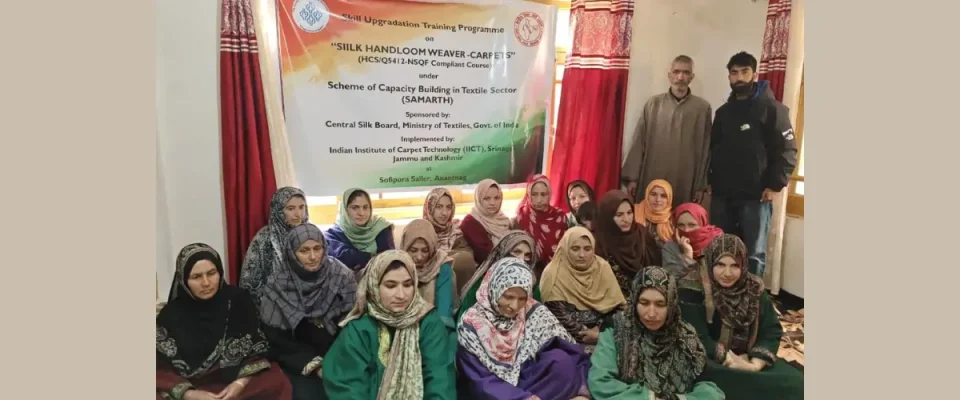
The Department of Handicrafts and Handloom Kashmir has launched a large-scale skill upgradation programme aimed at strengthening the region’s traditional carpet weaving sector while creating sustainable livelihood opportunities for women artisans. The initiative is being implemented through the Indian Institute of Carpet Technology (IICT) under the Ministry of Textiles-sponsored SAMARTH Scheme.
The programme will provide specialized training in silk carpet weaving using modern steel carpet looms, combining traditional craftsmanship with contemporary weaving techniques. A total of 180 women beneficiaries from eight districts of Kashmir have been enrolled in the training programme, which is designed to enhance technical skills, improve employability, and support the long-term sustainability of the region’s renowned carpet industry.
SAMARTH, a flagship capacity-building initiative of the Ministry of Textiles, focuses on demand-driven and industry-oriented skill development across the textile and handicrafts sectors. The programme follows the National Skills Qualifications Framework (NSQF), ensuring that participants receive nationally recognized training and certification.
According to officials, trainees who maintain a minimum attendance of 80 percent will receive a stipend of ₹5,000 per course, providing financial support alongside skill enhancement. Experienced master trainers engaged in the programme will also receive honorariums for delivering specialized training and mentoring participants throughout the course.
To maintain quality and transparency, the initiative incorporates Aadhaar-based biometric attendance monitoring and will be subject to third-party audits and verification by agencies appointed by the Ministry of Textiles. The evaluation process will assess training quality, attendance records, compliance standards, and overall programme outcomes.
The latest initiative forms part of broader efforts by the Department of Handicrafts and Handloom Kashmir to preserve and promote the world-famous Kashmir carpet craft. Through modernization of weaving infrastructure, artisan welfare measures, market linkages, geographical indication (GI) protection, and capacity-building programmes, the department aims to safeguard the centuries-old heritage while creating new economic opportunities, particularly for women across the Valley.