


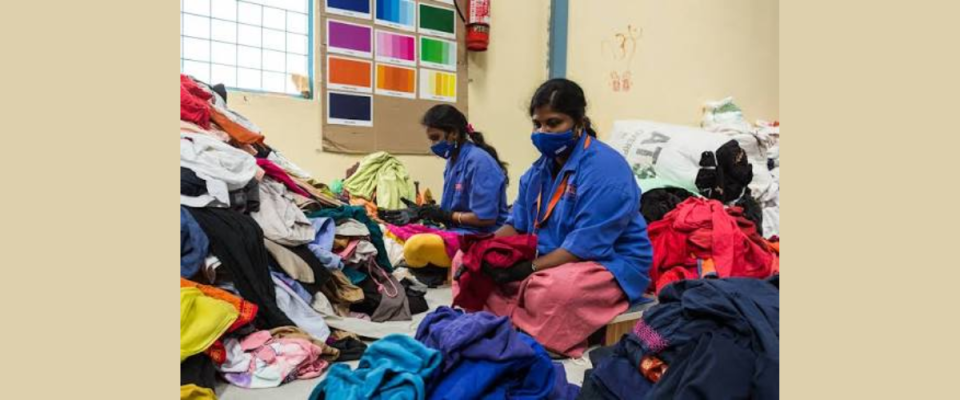
A textile recovery facility in Bengaluru is turning discarded clothing into reusable, recyclable and upcycled materials while creating livelihood opportunities for waste-picker communities.
BENGALURU, INDIA – A textile recovery facility in Bengaluru is developing a circular approach to discarded clothing by sorting, repairing, reselling, recycling and upcycling garments that might otherwise be sent to landfill. The initiative also connects textile recovery with employment opportunities for waste-picker communities.
The Textile Recovery Facility (TRF) at Hirandahalli was established in August 2024 under the Saamuhika Shakti initiative, with support from the Circular Apparel Innovation Factory (CAIF), an Intellecap initiative, and Hasiru Dala. The facility was started by Indumathi, a former waste picker who became a waste entrepreneur.
Textiles collected through Dry Waste Collection Centres, institutions, individuals and community drives are brought to the facility for assessment. Workers sort garments according to their type, quality, colour, condition and material composition, helping determine whether each item should be reused, repaired, recycled or directed towards another application.
Technology is also being used to improve textile sorting. The facility uses a Matoha textile identification device to identify fibre blends and material composition. This information can help determine suitable recovery routes and connect recovered materials with appropriate buyers and processors.
Rather than sending every discarded garment directly for recycling, the facility prioritises reuse and refurbishment. Clothing that can be repaired is restored, while suitable garments are sold through Navajeevana, a thrift store operating within the facility, as well as through pop-up thrift events in Bengaluru.
The wider Closing the Loop on Textile Waste programme had diverted approximately 5.76 lakh kg of textile waste from landfills by September 2025. Its collection network includes 16 Dry Waste Collection Centres, while textile collection has expanded to educational institutions, housing societies, hostels and community initiatives.
Textiles that are unsuitable for resale or repair can still be recovered for other uses. Polyester and blended materials have been linked with buyers in Coimbatore and Tiruppur, where recovered textiles can be used in applications including fillers and building materials. Other materials can be converted into industrial wipes depending on their quality and composition.
The initiative also has a strong livelihood component. Through collaboration with the Sambhav Foundation, post-consumer textile waste can be supplied to trained women from waste-picker families, who use tailoring and related skills to transform discarded materials into products for upcycling businesses.
Waste-picker communities are positioned as participants in the recovery system rather than simply as collectors. The facility provides sorting infrastructure and market connections, helping integrate informal waste workers into a more organised textile circularity model.
The Bengaluru model demonstrates that textile waste can follow multiple recovery pathways. High-quality garments can be resold, damaged clothing can be repaired, unsuitable textiles can be recycled or upcycled, and certain materials can enter industrial applications. This approach helps maximise the amount of material retained within the value chain.
For the textile industry, such recovery systems can support the development of a more circular supply chain by connecting collection, sorting, reuse, recycling and end markets. The combination of material recovery and livelihood creation also demonstrates how textile waste management can extend beyond disposal and become part of a broader circular-economy ecosystem.