


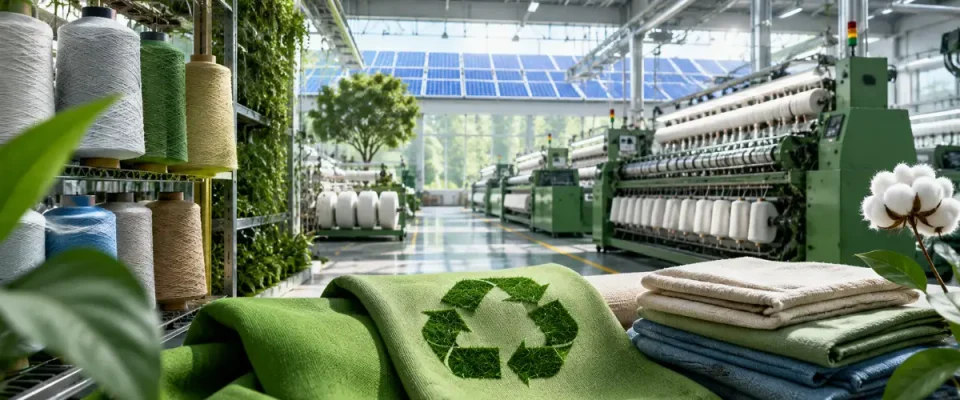
Sustainable Textile Manufacturing: Weaving a Greener Future for the Global Fashion Industry
How Innovation, Responsibility, and Technology Are Transforming Textile Production
The textile industry has long been a cornerstone of global manufacturing, supplying everything from everyday clothing to technical fabrics used in healthcare, automotive, and industrial applications. However, as environmental concerns intensify and consumers demand greater transparency, the industry is facing increasing pressure to rethink how textiles are produced.
Sustainable textile manufacturing has emerged as one of the most significant transformations in modern industrial history. Companies across the value chain are investing in cleaner technologies, eco-friendly materials, and responsible production practices to reduce their environmental footprint while remaining competitive in a rapidly evolving marketplace.
The Sustainability Challenge
The textile sector is one of the world’s largest consumers of water, energy, and raw materials. Traditional manufacturing processes often involve intensive resource consumption, chemical usage, and significant waste generation.
Key environmental concerns include:
- High water consumption in dyeing and finishing processes
- Carbon emissions from manufacturing operations
- Textile waste ending up in landfills
- Chemical pollution affecting ecosystems
- Dependence on non-renewable resources
As governments, brands, and consumers place greater emphasis on sustainability, manufacturers are increasingly adopting innovative solutions to address these challenges.
Sustainable Fibres: The Foundation of Change
One of the most visible shifts in the industry is the growing adoption of sustainable fibres.
Manufacturers are increasingly incorporating:
- Organic cotton
- Recycled polyester
- Hemp fibres
- Bamboo textiles
- Regenerated cellulose fibres
- Bio-based materials
These alternatives help reduce dependence on virgin resources while supporting circular economy principles.
Recycled polyester, in particular, has gained significant traction as brands seek to reduce plastic waste and lower their environmental impact.
Water Conservation Through Advanced Technologies
Water scarcity has become a major concern for textile-producing regions around the world. In response, manufacturers are investing in technologies designed to reduce water consumption.
Innovations include:
- Waterless dyeing systems
- Low-liquor dyeing machines
- Digital textile printing
- Closed-loop water recycling systems
- Advanced wastewater treatment facilities
These technologies not only reduce environmental impact but also improve operational efficiency and lower long-term production costs.
Renewable Energy Powers the Next Generation of Textile Mills
Energy consumption remains a major contributor to the textile industry’s carbon footprint. To address this challenge, many manufacturers are transitioning toward renewable energy sources.
Leading textile facilities are investing in:
- Solar power installations
- Wind energy projects
- Biomass energy systems
- Energy-efficient machinery
- Smart energy management solutions
These initiatives help manufacturers reduce greenhouse gas emissions while improving energy security and cost stability.
The Rise of Circular Fashion
The traditional “take, make, dispose” model is gradually being replaced by circular production systems.
Circular textile manufacturing focuses on:
- Designing products for longevity
- Recycling fibres and fabrics
- Reducing material waste
- Reusing production scraps
- Extending product life cycles
Many brands now view circularity as a strategic necessity rather than an optional sustainability initiative.
Digital Innovation Accelerates Sustainability
Technology is playing a crucial role in making textile manufacturing more sustainable.
Artificial intelligence, automation, and data analytics are helping manufacturers:
- Optimize resource usage
- Reduce production waste
- Improve quality control
- Predict maintenance requirements
- Enhance supply chain transparency
Digital textile printing has also emerged as a game-changing innovation, enabling on-demand production while significantly reducing water and chemical consumption.
Consumer Demand Is Driving Change
Today’s consumers are increasingly aware of the environmental impact of their purchasing decisions.
Buyers are demanding:
- Sustainable materials
- Ethical sourcing practices
- Transparent supply chains
- Environmentally friendly production methods
- Reduced carbon footprints
As a result, sustainability has evolved from a compliance requirement into a powerful competitive advantage.
Challenges on the Road to Sustainability
Despite significant progress, the transition to sustainable textile manufacturing is not without obstacles.
Manufacturers continue to face challenges such as:
- High initial investment costs
- Limited availability of sustainable raw materials
- Complex certification requirements
- Supply chain traceability issues
- Balancing sustainability with affordability
For many companies, achieving sustainability goals requires substantial long-term commitment and collaboration across the entire value chain.
India’s Opportunity in Sustainable Textiles
India, one of the world’s largest textile producers, is uniquely positioned to become a global leader in sustainable manufacturing.
The country benefits from:
- A large textile ecosystem
- Growing renewable energy capacity
- Strong government support
- Expanding technical textile capabilities
- Increasing investments in green manufacturing
By embracing sustainable production practices, India can strengthen its competitiveness while meeting the evolving expectations of global brands and consumers.
The Future of Textile Manufacturing
The future of the textile industry will be defined not only by productivity and profitability but also by environmental responsibility.
Manufacturers that successfully integrate sustainability into their operations will be better positioned to:
- Access international markets
- Attract global brands
- Meet regulatory requirements
- Reduce operational risks
- Build long-term business resilience
As innovation continues to accelerate, sustainable textile manufacturing is no longer a niche trend—it is becoming the foundation of the industry’s future.
Conclusion
Sustainable textile manufacturing represents a fundamental shift in how fabrics are designed, produced, and consumed. Through cleaner technologies, renewable energy, circular production models, and responsible sourcing, the industry is taking important steps toward reducing its environmental impact.
While challenges remain, the momentum behind sustainability is undeniable. Companies that embrace this transformation today will play a leading role in shaping a greener, more resilient, and more competitive textile industry for generations to come.