


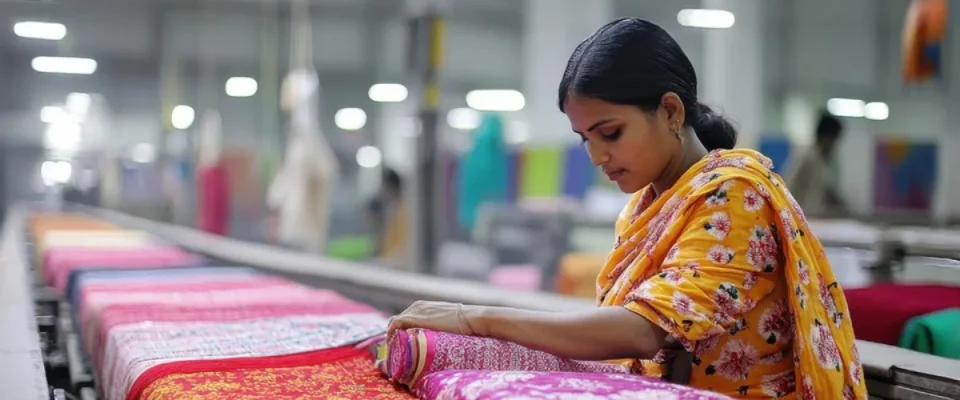
India’s new Labour Codes are set to transform the textile sector by simplifying compliance, improving worker welfare, and creating a more efficient and future-ready industry.
The textile sector is one of India’s oldest and most vital industries, contributing significantly to the nation’s economy, employment, and exports. Accounting for 2.3% of GDP, 13% of industrial production, and 12% of total exports, it is also the second-largest employment generator, after agriculture, with over 45 million people engaged directly, many of them women and rural workers. Nearly 80% of the industry operates through MSME clusters, reflecting its inclusive structure.
The implementation of the new Labor Codes has important implications for the textile industry. By creating a unified framework for wages, employment contracts, workplace safety, social security and dispute resolution, the Codes simplify compliance while strengthening worker welfare. For a labor-intensive sector like textiles, these reforms ensure fair treatment, safer working conditions, and better social protection, while providing employers greater flexibility in workforce management.
Benefits to Textile Sector Employers under the Labor Codes
1. Consolidation of Labor Laws
The consolidation of 29 existing labor laws into four simplified Codes—on Wages, Industrial Relations (IR), Occupational Safety, Health and Working Conditions (OSH), and Social Security—eliminates duplication and overlapping provisions. Textile employers will now operate under a unified legal framework with a single set of definitions and authorities, reducing administrative confusion and ensuring uniform compliance across units and states. This simplification particularly benefits large textile clusters operating in multiple jurisdictions by saving time and costs, enabling faster decision-making, and improving business predictability.
2. Higher Threshold for Standing Orders (100 to 300 workers)
Raising the applicability threshold for standing orders from 100 to 300 workers reduces the compliance burden on small and medium textile enterprises, which make up a significant share of India’s apparel and fabric manufacturing base. Exempting smaller units from the requirement of certified standing orders will enable them to focus resources on productivity and export readiness rather than procedural compliance, thereby improving their competitiveness in the global textile value chain.
3. Simplified Industrial Dispute Resolution
Earlier, industrial disputes could only be referred to tribunals at the discretion of government officials, often causing delays. The Codes streamline this process by promoting faster conciliation and reducing litigation. Textile units, which depend on timely production cycles to meet export orders, will benefit from quicker resolution of disputes, ensuring continuity of operations and industrial harmony.
4. Single Registration, Return, and All-India Licenses
The introduction of a single registration, common return, and five-year all-India license with deemed approvals significantly enhances “Ease of Doing Business.” For textile companies operating integrated supply chains across states, these measures reduce bureaucratic delays and administrative costs, enabling faster start-up, expansion, and scaling of production capacities. Additionally, the OSH & WC Code provides for common licensing for engaging contract labor and operating establishments electronically. This simplifies subcontracting of specialized textile processes such as dyeing, embroidery, or finishing, ensuring seamless supply-chain operations.
5. Revised Factory Licensing Threshold and Time-bound Approvals
The threshold raised for factory licensing (from 10 to 20 workers with power and from 20 to 40 without power), will exempt small textile units from licensing obligations. Further, a 30-day time limit for granting permissions for factory construction, expansion, or hazardous processes introduces certainty and efficiency. These provisions will help textile manufacturers quickly respond to new export orders, set up new units, or expand existing ones without procedural bottlenecks.
6. National Standards and Centralized Board
Replacing multiple boards with a single National Tripartite Board will bring uniform occupational safety and health standards across India. For the textile sector, where units operate in multiple states under varied rules, this uniformity will ensure fairness, predictability, and simplified compliance. Harmonized national standards also align India’s textile industry with international labor norms, improving its global competitiveness and buyer confidence.
7. Third-Party Audit and Certification
The OSH Code’s provision for third-party audits enables textile establishments, especially start-ups, to obtain safety certification without direct inspection. This reduces inspector interference while ensuring health and safety improvements. Independent audits will enhance credibility in international compliance assessments, making Indian textile products more acceptable to global brands committed to ethical sourcing norms.
8. Digitization of Registers and Records
By reducing the number of registers to be maintained and promoting digital recordkeeping, the Codes make compliance paperless, efficient, and transparent. Textile units, especially those in export clusters with multiple subcontractors, will benefit from simplified digital documentation, improved traceability, and better audit readiness.
9. Time Limit for EPF Inquiries
Setting a five-year limit for initiating EPF inquiries, with completion required within two years (extendable by one year), ensures timely and predictable compliance for textile employers. This reduces prolonged investigations and enhances legal certainty, enabling management to focus on productivity and workforce welfare.
10. Reduced Deposit for EPFO Appeals
Reducing the mandatory deposit for appeals before the EPFO Tribunal from 40–70% to 25% of the assessed amount eases the financial burden on textile employers. This facilitates fair dispute resolution while ensuring better liquidity for ongoing business operations.
11. Abolition of Suo Motu Reopening of Cases
The discretionary power to reopen cases on a suo motu basis under the EPF & MP Act, 1952 has been removed under the Social Security Code, 2020, enhancing predictability and reducing compliance-related uncertainty.
12. Decriminalization of Offences
Replacing imprisonment with monetary penalties for procedural lapses, and providing 30 days for compliance before legal action, shifts enforcement from punitive to facilitative. This encourages voluntary compliance and reduces fear of prosecution among textile entrepreneurs, promoting a collaborative regulatory environment.
13. Compounding of Offences
Allowing first-time offences punishable with fines to be compounded at 50% of the maximum amount provides a practical mechanism for resolving minor infractions without litigation. Textile firms can address compliance issues swiftly, maintain production continuity, and avoid legal uncertainty.
14. Inspector-cum-Facilitators and Web-based Inspections
Replacing traditional inspectors with inspector-cum-facilitators and adopting randomized, technology-based inspections improves transparency and trust. For textile employers, this reduces harassment and ensures uniform, objective inspections. Inspectors now act as compliance partners rather than enforcers, promoting cooperation and adherence to safety and welfare standards.
15. Fixed Term Employment (FTE)
The Codes allow employers to hire workers on a fixed-term basis, with equal pay and benefits as permanent employees. This enables textile units, especially those handling export orders with fluctuating seasonal demand, to adjust workforce strength without relying heavily on contract labor or retrenchment. It provides flexibility while ensuring workforce stability during peak production periods.
16. National Database for Unorganized Workers (NDUW)
The Code, accessed through the e-Shram portal, is provisioned in the Code on Social Security, 2020. Employers in textile clusters can use the national database to source verified and skilled workers, especially during peak seasons. This helps address the chronic labor shortage issue and facilitates quick recruitment of trained workers.
Benefits to Textile Workers under the Labor Codes
1. Universalization of Minimum Wages
All textile workers, irrespective of employment category or nature of work, are now entitled to minimum wages. Extending this protection beyond scheduled employment ensures fair compensation across spinning, weaving, garmenting and processing units, reducing wage disparities and preventing exploitation.
2. Floor Wage
A national floor wage set by the Central Government, based on minimum living standards, guarantees a basic income threshold. This prevents wage-based migration across states and will ensure that textile workers in low-wage regions receive fair and comparable remuneration.
3. Overtime Wages
Mandatory payment of double the ordinary rate for overtime work benefits textile workers, especially in export-oriented units with high production demand. It ensures fair compensation for extended hours and discourages unpaid overtime.
4. Timely Payment and No Unauthorized Deductions
Ensuring time-bound wage payments and prohibiting unauthorized deductions strengthens financial security for textile workers, most of whom rely on monthly wages. These provisions apply to all employees, ensuring fairness, transparency and trust in wage disbursal.
5. Extended Limitation Period
Increasing the time limit for filing claims to three years allows textile workers to seek redressal for wage or benefit-related disputes that may arise over longer work cycles or through multiple employers.
6. Prohibition of Gender Discrimination
The Code mandates gender equality in recruitment, wages and working conditions. This provision is vital for the textile sector, where women form a substantial share of the workforce, ensuring parity, dignity, and non-discrimination in all employment aspects.
7. Commuting Accidents Covered
By recognizing commuting accidents as arising out of employment, textile workers gain extended compensation protection, especially beneficial for those in industrial clusters and export parks who travel long distances.
8. Pan-India ESIC Coverage
Nationwide ESIC coverage, along with voluntary enrolment, ensures textile workers, especially those in small units or informal setups, gain access to medical, disability and maternity benefits, strengthening social protection.
9. Expanded Definition of Family
Including parents-in-law within the definition of “family” for female workers provides broader dependent coverage under social security benefits, promoting inclusivity and family welfare in the textile sector.
10. Formalization through Appointment Letters
Mandatory appointment letters specifying terms of employment enhance job security, legal recognition and access to social benefits. For textile workers, many of whom are temporary or piece-rate employees, this ensures formal inclusion in the organized sector, protecting them from arbitrary dismissal and wage disputes.
11. Free Annual Health Check-ups
Compulsory annual health check-ups support preventive healthcare and early detection of occupational ailments, such as respiratory or ergonomic issues common in textile work. This improves workers’ long-term health and productivity while helping employers maintain a healthier, more efficient workforce.
12. Annual Leave with Wages
Reducing the eligibility threshold from 240 to 180 working days enables more textile workers, especially seasonal or contract workers, to qualify for paid annual leave. This provides rest and recreation opportunities, safeguards health, and improves morale without income loss.
13. Broadened Definition of Inter-State Migrant Worker
By covering both directly employed and self-migrated workers, the new definition ensures comprehensive protection for the large number of migrant workers in the textile industry. They will now receive equal treatment in wages, housing, and welfare benefits, reducing vulnerability and exploitation.
14. Uniform Health, Safety and Welfare Facilities
Uniform standards for workplace facilities such as toilets, drinking water, restrooms, and canteens ensure basic dignity and comfort for textile workers, particularly in large factories employing over 100 persons. Consistent standards across states also support international compliance audits, enhancing India’s reputation as a responsible sourcing destination.
15. Fixed Term Employment (FTE) with Equal Benefits
Textile workers hired on fixed-term contracts receive the same pay, working conditions and social security benefits as permanent employees, including gratuity (on pro-rata basis). This provides job security and formal recognition for seasonal workers.
16. Mandatory Welfare and Safety Standards for Women Workers
The Codes mandate safe working conditions, transportation, lighting and security for women working night shifts. In 24×7 textile export units, this will open more opportunities for women and ensure gender equity at workplaces.
17. Skill Development and Re-Skilling Fund
The IR Code’s provision for a re-skilling fund for retrenched workers ensures continuous employability for textile workers affected by automation or industry shifts.
News Courtesy : Press Information Bureau