

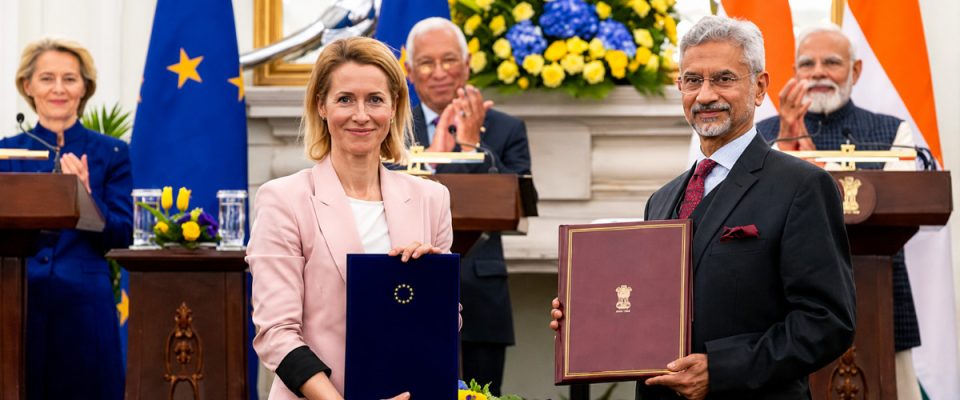
The proposed European Union–India Free Trade Agreement (FTA) is expected to provide a major boost to India’s textile and apparel industry by improving market access, increasing exports, and strengthening the country’s global competitiveness.
Industry experts believe the agreement could significantly reduce or eliminate import duties on Indian textile and garment products entering European markets. Currently, Indian textile exports to the EU face tariffs ranging from 9 percent to 12 percent, while competing nations such as Bangladesh and Vietnam enjoy preferential trade advantages under separate agreements.
The removal of tariff barriers is expected to make Indian textile products more price competitive in Europe, helping exporters expand their market share across categories including garments, home textiles, technical textiles, yarn, and fabrics.
The European Union remains one of India’s largest export destinations for textiles and apparel. According to industry estimates, the FTA could accelerate export growth, attract fresh investments, and create large-scale employment opportunities across spinning, weaving, processing, and garment manufacturing sectors.
Industry leaders have stated that the agreement could particularly benefit India’s cotton textile segment, where the country already has strong manufacturing capabilities and a well-established supply chain. The deal is also expected to support the government’s efforts to position India as a global textile sourcing hub under initiatives such as “Make in India” and the Production Linked Incentive (PLI) scheme.
In addition to export growth, the FTA may encourage technology transfer, sustainability collaboration, and higher quality standards, helping Indian manufacturers align more closely with European environmental and compliance requirements.
However, experts also noted that Indian textile companies would need to focus on innovation, sustainability, faster delivery timelines, and value-added products to fully capitalize on the opportunities created by the agreement.
The textile industry views the EU–India FTA as a strategic development that could strengthen India’s long-term position in the global textile and apparel market while enhancing trade relations between India and Europe.