


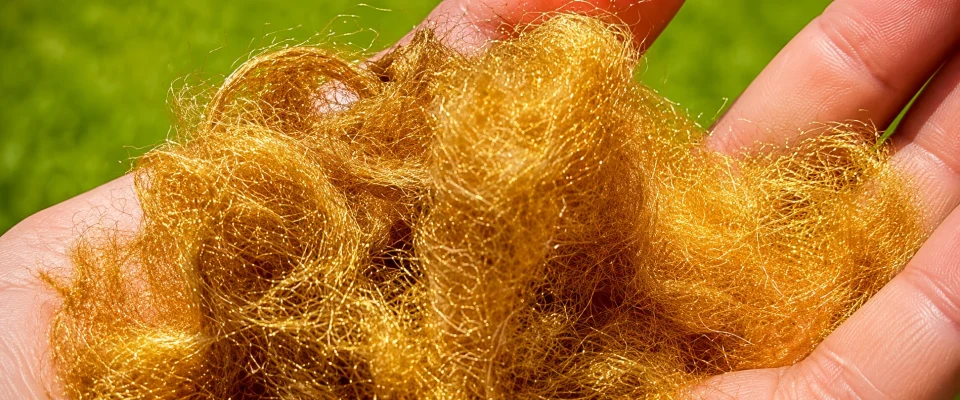
The Return of Sea Silk: Scientists Recreate the Legendary Golden Fabric Lost to History
For centuries, sea silk was regarded as one of the world’s most extraordinary and exclusive textiles. Woven from fibers produced by marine shellfish, the shimmering golden fabric adorned emperors, popes, and royalty, earning a near-mythical status throughout history. Now, a team of South Korean researchers has successfully recreated this legendary material and uncovered the scientific secret behind its enduring brilliance.
Researchers from POSTECH (Pohang University of Science and Technology), led by Professor Dong Soo Hwang and Professor Jimin Choi, have developed a sea silk-like fiber using byssus threads from the pen shell (Atrina pectinata), a shellfish cultivated in Korean coastal waters. Their breakthrough not only revives an ancient textile tradition but also opens new possibilities for sustainable and dye-free materials.
A Textile Treasure of the Ancient World
Known as the “golden fiber of the sea,” traditional sea silk was produced from the byssus threads of Pinna nobilis, a large Mediterranean mollusk. These silky fibers allowed the shellfish to anchor itself to rocky seabeds and were carefully harvested and spun into an exceptionally lightweight, durable fabric with a natural golden shimmer.
During the Roman era, sea silk was considered one of the rarest luxury textiles in existence. Its scarcity and beauty made it highly sought after by nobility and religious leaders. Historical artifacts, including the famed Holy Face of Manoppello in Italy, are believed to have been crafted from this remarkable material.
However, environmental degradation, marine pollution, and habitat loss have pushed Pinna nobilis to the brink of extinction. Today, the species is protected under European Union regulations, and authentic sea silk production has nearly disappeared.
Recreating a Lost Masterpiece
Seeking a sustainable alternative, the South Korean research team turned to Atrina pectinata, commonly known as the pen shell. Widely cultivated for food, the shellfish produces byssus fibers that share striking similarities with those of Pinna nobilis.
Through extensive analysis, researchers found that the pen shell fibers closely matched the physical and chemical characteristics of traditional sea silk. Using these fibers, they successfully recreated a material that mirrors the appearance and texture of the legendary textile.
The Secret Behind the Golden Glow
Beyond recreating the fiber, the researchers solved a mystery that has fascinated historians and scientists for generations: Why does sea silk retain its dazzling golden color for centuries?
Their findings revealed that sea silk’s signature hue does not come from pigments or dyes. Instead, it results from a phenomenon known as structural coloration.
Microscopic protein structures within the fibers, called “photonin,” interact with light to create the fabric’s shimmering golden appearance. Similar optical effects can be seen in butterfly wings, peacock feathers, and soap bubbles.
Because the color originates from the fiber’s internal structure rather than applied dyes, it remains remarkably stable and resistant to fading over time. Researchers found that the more precisely these protein structures are arranged, the more intense and vibrant the golden color becomes.
A Sustainable Future for Advanced Textiles
The breakthrough has implications that extend far beyond historical curiosity.
Traditionally discarded as marine waste, pen shell byssus fibers could now become a valuable resource for developing sustainable textiles. The technology offers a dye-free approach to coloration, reducing environmental impacts associated with conventional textile dyeing processes.
According to Professor Dong Soo Hwang, structurally colored textiles possess natural resistance to fading and can maintain vibrant colors without the need for dyes, pigments, or metallic additives.
As the fashion industry increasingly seeks environmentally friendly materials and innovative manufacturing methods, the revival of sea silk demonstrates how ancient wisdom and modern science can come together to create the next generation of sustainable textiles.
More than 2,000 years after its rise to prominence, the legendary golden fabric of antiquity may once again find a place in the future of fashion and advanced materials.
Article Courtesy: sciencedaily