


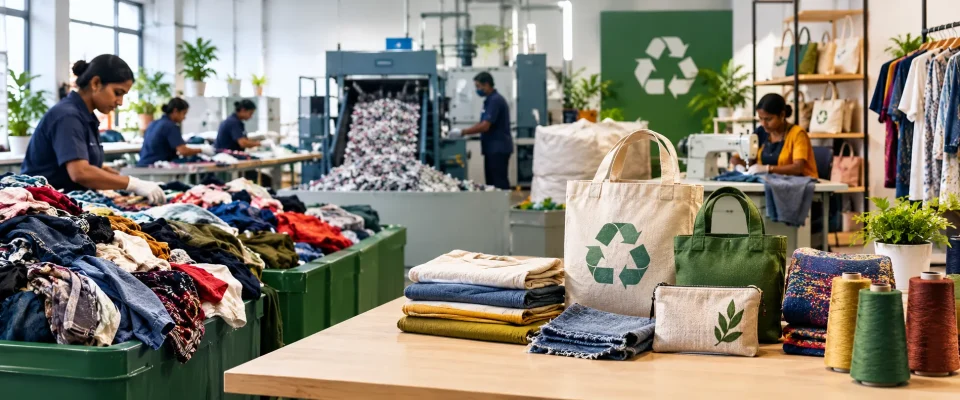
Bengaluru Launches First Circular Textile Lab to Recycle Textile Waste
Bengaluru: Bengaluru has launched its first Circular Textile Lab in Koramangala, marking a step towards reducing textile waste sent to landfills while promoting fabric reuse, recycling and livelihood opportunities for local communities.
The new facility will collect textile waste generated by garment manufacturing units and tailoring establishments and process discarded materials for reuse. Recovered textiles will be transformed into products such as garments and eco-friendly bags, helping return textile materials to the production cycle instead of sending them to landfills.
The lab has been established at Kasa Rasa Kendra, a ward-level solid waste management centre initiated by NGO Saahas. The project is an initiative of South City Corporation and was inaugurated by Forest Minister Ramalinga Reddy, along with officials from the Greater Bengaluru Authority (GBA).
Beyond waste management, the initiative aims to create employment opportunities for economically disadvantaged communities, particularly local tailors and women. By linking textile recovery with livelihood generation, the project seeks to create a more inclusive circular economy model.
A thrift store will also operate at the facility, offering recycled and upcycled textile products for sale. Revenue generated through the store will contribute towards worker welfare and support the continued operation and management of the circular textile initiative.
The facility has also been equipped with an effluent and sewage treatment system to manage dyes and chemicals generated during textile processing. The system is intended to minimise the risk of water and environmental pollution associated with recycling and processing activities.
The circular textile model has previously been implemented in Kolar Gold Fields (KGF). Following its initial operation in Koramangala, the model is expected to be expanded to other wards across Bengaluru.
The initiative highlights Bengaluru’s growing focus on textile waste segregation, recycling, upcycling and circular production, while demonstrating how urban waste-management systems can combine environmental goals with employment and livelihood creation.