


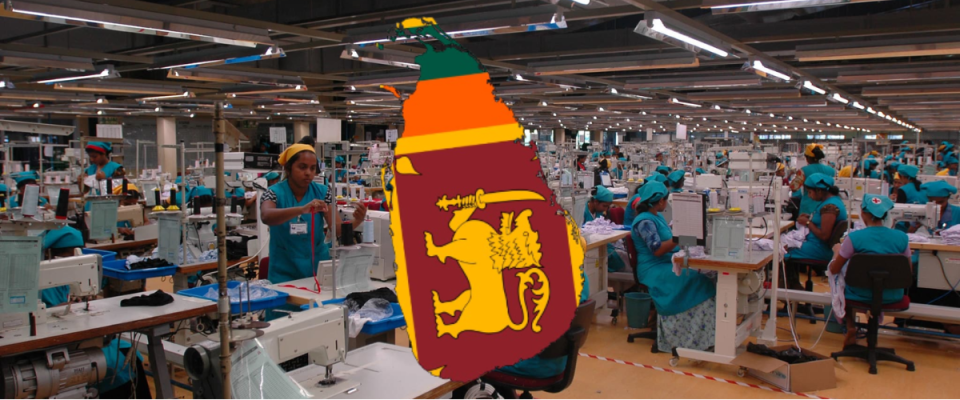
Industry leaders are seeking stronger incentives for fabric mills and upstream manufacturing as Sri Lanka targets US$8 billion in apparel exports by 2030.
Sri Lanka’s apparel industry is calling for stronger investment incentives to attract capital into fabric mills and other upstream manufacturing activities, as the sector looks to strengthen domestic value addition and raise apparel exports to US$8 billion by 2030. The Joint Apparel Association Forum (JAAF) has identified greater local production of raw materials as an important requirement for the industry’s next phase of growth.
The industry continues to depend significantly on imported inputs. Domestic manufacturers currently meet only around one-third of Sri Lanka’s demand for synthetic yarn and fabric, leaving apparel producers reliant on overseas suppliers for a substantial share of their materials. JAAF is therefore seeking policies that encourage investment in fabric production, trims and packaging alongside new apparel manufacturing projects.
Sri Lanka’s apparel exports have remained around the US$5 billion level for several years. The country recorded approximately US$4.9 billion in apparel exports in 2025, while textile exports reached US$522 million. The US International Trade Administration also notes that the sector spends an estimated US$2 billion annually on imported inputs, primarily fabric, highlighting the scale of the opportunity for developing domestic upstream capacity.
JAAF is seeking investment incentives that can compete with those available in other apparel-producing countries. The association argues that stronger local supply chains could reduce dependence on imported materials while allowing a larger share of export value to remain within Sri Lanka. The industry is also encouraging existing apparel manufacturers to reinvest in upstream operations such as fabric mills and supporting production facilities.
Alongside domestic investment, the apparel industry is seeking wider preferential access to international markets. JAAF has called for the government to pursue a preferential trade arrangement with the United States, apply for the European Union’s new GSP Plus scheme in 2027 and strengthen Sri Lanka’s existing trade agreement with India. It has also proposed opening trade negotiations with South Korea, Japan, Australia and New Zealand.
The sector is also pushing for greater adoption of automation, robotics and artificial intelligence to improve manufacturing productivity. JAAF has identified faster regulatory approvals, clearer VAT treatment for exporters, greater flexibility in foreign-currency transactions and labour-law reforms among the other areas requiring attention.
Energy competitiveness has also emerged as a priority, with the industry seeking progress on open-access and power-wheeling regulations as well as stronger incentives for battery storage. These measures are intended to improve the reliability and sustainability of energy supplies for manufacturing facilities.
Sri Lanka already has an established network of fabric and apparel accessory manufacturers. The Fabric & Apparel Accessory Manufacturers Association (FAAMA), which operates under JAAF, represents more than 30 member companies and promotes investment, innovation, infrastructure development and foreign direct investment in the upstream supply chain.
With apparel accounting for roughly 40% of Sri Lanka’s merchandise export revenue and directly employing an estimated 300,000–350,000 people, strengthening fabric and accessory manufacturing could play an important role in the industry’s efforts to expand exports. The sector is now seeking a combination of investment support, improved market access, technology adoption and regulatory reforms to build the additional capacity needed for its US$8 billion export ambition.