


FTC Approves Renoa, First New Apparel Fiber Classification in Nearly 25 Years
The U.S. Federal Trade Commission (FTC) has approved renoa, a newly developed regenerated fiber from next-generation materials company Everbloom, marking the first new apparel fiber classification approved by the agency in nearly 25 years. The approval establishes renoa as a distinct fiber category and enables textile products containing the material to be labelled and commercialised in the U.S. market.
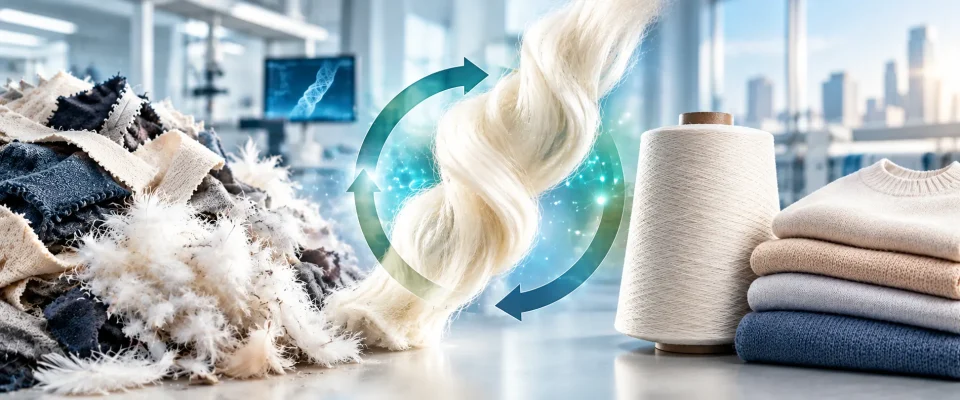
Developed at Everbloom’s laboratory in New York City, renoa is described by the company as the world’s first fiber regenerated from keratin-rich textile offcuts and waste, including down. Manufactured in the United States using domestic resources, the fiber is designed to combine the softness, breathability and premium hand feel associated with materials such as cashmere and wool with improved durability, consistency and longevity.
The FTC approval represents a significant regulatory and technological milestone for the textile industry. Although numerous fabrics and textile blends have been introduced over the years, securing recognition as an entirely new apparel fiber category requires demonstrating that the material is fundamentally different from existing fiber classifications through a detailed regulatory review. The previous new apparel fiber classification approved by the FTC was PLA in 2002.
According to Everbloom, renoa is also the first fiber developed using its proprietary artificial intelligence platform, Braid.AI. The platform combines predictive modelling with thermoplastic protein engineering to help optimise the conversion of keratin-rich proteins into high-performance fibers. By predicting characteristics such as softness, strength, texture and dyeability before production, the technology is designed to accelerate material development while improving manufacturing consistency and scalability.
A major challenge in processing keratin-rich textile waste is the natural variation in its composition. Everbloom says Braid.AI can predict how different protein streams will behave during manufacturing, allowing production parameters to be optimised before the process begins. This approach has reduced the company’s laboratory testing period from approximately two months to two weeks, according to Everbloom.
“Renoa is the result of years of work by our material and computer scientists, chemical engineers and fashion designers to craft a circular fiber that combines the best of biology and human ingenuity to optimise hand-feel and performance while dropping seamlessly into existing industrial infrastructure,” said Simardev Gulati, Co-Founder and CEO of Everbloom. He added that the combination of the company’s AI platform and advanced manufacturing could create a new fiber category while supporting efforts to rebuild domestic textile manufacturing capacity in the U.S.
Everbloom’s patented manufacturing process begins by purifying and refining keratin-rich textile waste into protein. The material is then structurally engineered and converted into high-performance fibers designed to work with existing yarn-spinning equipment and textile supply chains. The resulting fiber is intended to offer qualities associated with luxury natural materials while providing the consistency and scalability required for modern textile manufacturing.
The technology could also enable new applications for luxury apparel, including machine-washable cashmere and wool blends. This could combine the premium characteristics of traditional luxury fibers with improved ease of care, while providing manufacturers with a regenerated material derived from existing textile waste.
The development comes as the fashion industry faces increasing pressure to reduce its environmental impact and dependence on resource-intensive raw materials. Everbloom says the fashion industry generates more than 20 billion pounds of keratin-rich textile waste annually, creating an opportunity to recover these materials and convert them into new products.
Independent assessments by Boundless Impact Research & Analytics, cited by Everbloom, found that renoa uses more than 99% less water than silk production, 50% less than cashmere and 30% less than wool. The assessments also indicate that renoa can generate up to 92% fewer greenhouse gas emissions than bio-recycled polyester, silk, cashmere and wool. These figures are presented by the company as evidence of the potential environmental benefits of converting existing textile waste into new fibers rather than relying solely on conventional raw materials.
The development also has a domestic manufacturing dimension. The American Apparel & Footwear Association estimates that approximately 97% of clothing and footwear sold in the U.S. is imported, with a significant share of manufacturing concentrated in Asia. Everbloom aims to use renoa and its technology platform to support a more locally integrated textile manufacturing ecosystem.
The FTC approval follows Everbloom’s launch in 2025 and a funding round led by Hoxton Ventures, with participation from SOSV, Breakthrough Energy, Endgame Capital, Clocktower Ventures and the Partnership Fund for New York City. The company plans to expand production and develop partnerships with mills, manufacturers and fashion brands as commercial demand for next-generation fibers grows.
Maria Gotsch, President and CEO of the Partnership Fund for New York City, said Everbloom’s work demonstrates how technology can help reshape the fashion industry while addressing environmental challenges. The organisation has supported the company as part of its investment in emerging sustainable materials innovation in New York City.
With the new FTC classification now approved, brands can label and commercialise products containing renoa in the U.S. market. Everbloom said several commercial programmes featuring the fiber are already underway, with additional brand and manufacturing partnerships expected as production expands.