
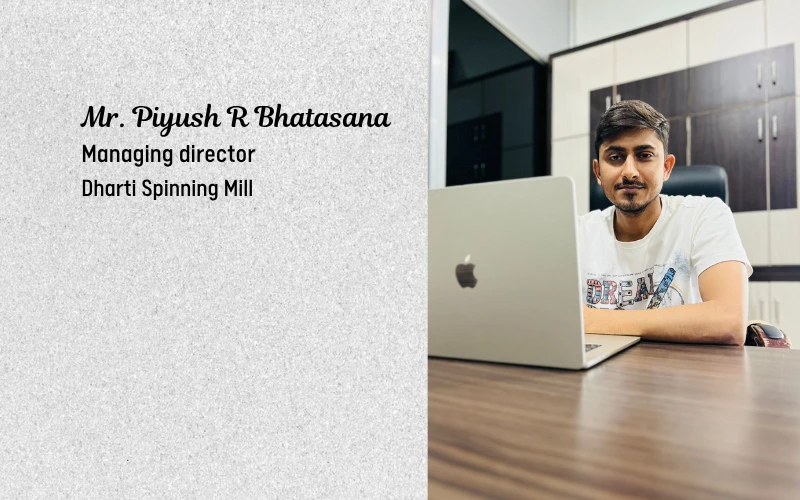
Dharti Spinning Mill, founded in 2012, stands as a beacon of excellence in the textile industry. With a legacy defined by innovation, integrity, and unwavering commitment to quality, we specialize in crafting premium cotton products to meet the diverse needs of our global clientele. Sustainability is at the heart of our operations, as we prioritize eco-friendly practices throughout our processes.
From our state-of-the-art facilities, we blend tradition with modernity, delivering products that exceed expectations. At Dharti, we don’t just weave threads; we weave experiences, relationships, and the fabric of tomorrow.
TexMart : What inspired the founding vision of Dharti Spinning Mill, and how has it evolved?
Piyush R Bhatasana : Dharti Spinning Mill was established with the aim of delivering consistent, high-quality cotton yarn while building a reputation rooted in trust and reliability. The founders recognized early gaps in quality consistency and supply chain stability within the spinning sector. Over the years, this vision has evolved to include technological modernization, sustainability integration, and a stronger global outlook. Today, the company not only focuses on product excellence but also on responsible manufacturing and long-term industry relevance.
TM : How does the founding philosophy influence current operations?
PRB : The company’s philosophy of quality, transparency, and innovation is deeply embedded in its day-to-day operations. From raw material sourcing to final dispatch, every stage is guided by strict quality benchmarks and ethical standards. This philosophy also drives continuous improvement, encouraging the adoption of new technologies and practices that enhance efficiency while maintaining product integrity.
TM : How does Dharti Spinning ensure consistent yarn quality?
PRB : Consistency is achieved through a combination of premium cotton sourcing, advanced spinning techniques, and rigorous quality control protocols. Each batch undergoes multiple testing stages to ensure uniformity in strength, count, and finish. The integration of automated monitoring systems helps detect variations in real time, allowing immediate corrective actions and minimizing defects.
TM : What advanced technologies are used in production?
PRB : The company leverages modern ring spinning systems, automated winding machines, and contamination control technologies to maintain high efficiency. Additionally, real-time data monitoring and process optimization tools enable better control over production variables, ensuring both productivity and quality. These technologies reduce wastage and enhance operational precision.
R&D efforts are focused on refining fiber blending techniques, optimizing twist levels, and improving spinning conditions to produce yarns with superior strength and softness. The company is also exploring specialized yarns tailored for high-performance applications, including textiles requiring durability, comfort, and enhanced finish.
TM : How does the company respond to changing market demands?
PRB : Dharti Spinning maintains close engagement with customers and monitors global textile trends to adapt its offerings accordingly. By understanding end-use requirements—such as apparel, home textiles, or industrial applications—the company is able to customize yarn specifications and remain responsive to evolving market expectations.
TM : What role does innovation play in staying competitive?
PRB : Innovation acts as a key differentiator, enabling the company to improve efficiency, reduce costs, and introduce value-added products. Continuous process improvements and product development initiatives ensure that Dharti Spinning remains competitive in both domestic and export markets.
TM : How is the company advancing sustainable product innovation?
PRB : The company is investing in research related to eco-friendly fibers, low-impact processing techniques, and energy-efficient production systems. These initiatives aim to reduce environmental impact while meeting the growing global demand for sustainable textiles.
TM : What strategies support long-term client relationships?
PRB : A strong emphasis on reliability, transparency, and consistent quality helps build
trust with clients. The company prioritizes timely deliveries, responsive communication, and customized solutions, ensuring that clients receive products tailored to their specific needs.
TM : How is cost efficiency managed without compromising quality?
PRB : Cost efficiency is achieved through process optimization, automation, and efficient resource utilization. By minimizing waste and improving productivity, the company maintains competitive pricing while upholding strict quality standards.
TM : What milestones have defined the company’s journey?
PRB : Key milestones include capacity expansion, entry into export markets, adoption of advanced machinery, and the establishment of a strong reputation for quality. Each phase of growth reflects the company’s commitment to continuous improvement and market responsiveness.
TM : How is Dharti Spinning contributing to industry advancement?
PRB : The company contributes by adopting modern technologies and setting benchmarks in quality and efficiency. Its focus on automation and process innovation supports the broader modernization of India’s spinning sector.
TM : What impact does automation have on operations?
PRB : Automation enhances productivity by reducing manual intervention, improving accuracy, and ensuring consistent output. It also allows better monitoring of processes, leading to reduced downtime and improved overall efficiency.
TM : How can emerging technologies transform the sector?
PRB : Emerging technologies like AI and IoT can enable predictive maintenance, optimize production planning, and provide real-time insights into machine performance. This can significantly enhance efficiency, reduce costs, and improve product quality across the industry.
TM : What are the key growth opportunities for India’s textile sector?
PRB : India is well-positioned to benefit from global supply chain diversification, increasing demand for sustainable textiles, and rising exports. Its strong raw material base and skilled workforce provide a competitive advantage.
TM : How is Dharti Spinning preparing for future growth?
PRB : The company is focusing on expanding production capacity, investing in advanced technologies, and strengthening its sustainability initiatives. It is also exploring new markets to enhance its global presence.
TM : What challenges must the industry address?
PRB : The industry faces challenges such as volatile raw material prices, increasing competition, and stricter environmental regulations. Addressing these requires innovation, policy support, and continuous technological upgrades.
TM : How does the company ensure ethical labor practices?
PRB : Dharti Spinning adheres to all labor regulations, providing safe working conditions, fair wages, and employee welfare programs. Regular audits and compliance checks ensure that standards are consistently maintained.
TM : What environmental measures are implemented?
PRB : The company focuses on reducing energy consumption, minimizing waste, and adopting cleaner production methods. These efforts contribute to a more sustainable manufacturing process.
TM : How does the company support community development?
PRB : By generating employment and supporting local initiatives, the company plays an active role in community development. It also encourages skill development and training programs to uplift the workforce.
TM : What recognitions has the company received?
PRB : The company has gained recognition for its quality standards and operational excellence, strengthening its credibility in the textile industry.
TM : How does participation in industry events benefit the company?
PRB : Industry events provide opportunities to showcase products, connect with potential clients, and stay updated on market trends and innovations.
TM : How do awards and certifications impact growth?
PRB : Awards and certifications enhance brand reputation, build customer trust, and open doors to new business opportunities, especially in international markets.