
India Extends Anti-Dumping Duty on Chinese PET Resin; Textile Sector Impact Expected to Be Minimal
The Government of India has extended the anti-dumping duty (ADD) on imports of polyethylene terephthalate (PET) resin from China for an additional five years, citing continued dumping practices, increasing import volumes, and ongoing injury to domestic manufacturers.
According to a notification issued by the Ministry of Finance, the duty of $200.66 per metric tonne will continue to apply to PET resin with an intrinsic viscosity of 0.72 dl/g or higher. Recycled PET resin remains exempt from the measure.
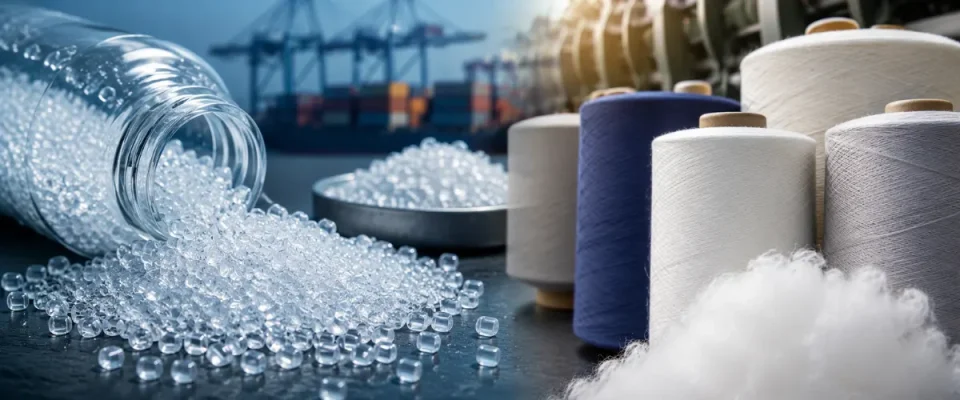
The move is primarily aimed at safeguarding India’s domestic PET resin industry from unfairly priced imports. PET resin is widely used in the production of water bottles, soft drink containers, edible oil packaging, and various food-grade packaging applications.
While the decision is expected to support local PET resin producers, industry experts believe its direct impact on the textile sector will be limited. Most integrated polyester manufacturers produce polyester melt internally using purified terephthalic acid (PTA) and monoethylene glycol (MEG) before converting it into polyester staple fibre (PSF) and filament yarns. As a result, their reliance on imported PET resin remains relatively low.
The extension comes amid a significant decline in polyester feedstock prices following easing geopolitical tensions in West Asia and a subsequent drop in crude oil prices. PTA prices in India have fallen from ₹93.90 per kg earlier this month to approximately ₹87.50 per kg, while polyester melt prices have declined by around ₹5.50 per kg.
In response to lower raw material costs, polyester manufacturers have reduced prices across several product categories, including Partially Oriented Yarn (POY), Fully Drawn Yarn (FDY), Polyester Textured Yarn (PTY), and Polyester Staple Fibre (PSF).
Market participants noted that the continued anti-dumping duty could help maintain domestic PET resin pricing and slightly increase costs for smaller, non-integrated fibre producers that depend on PET chips. However, the overall polyester value chain is currently benefiting from lower feedstock costs, which are expected to offset any marginal cost pressures resulting from the duty extension.
Industry observers therefore expect the measure to strengthen domestic PET resin manufacturing while having only a limited indirect impact on India’s broader textile and polyester sectors.