


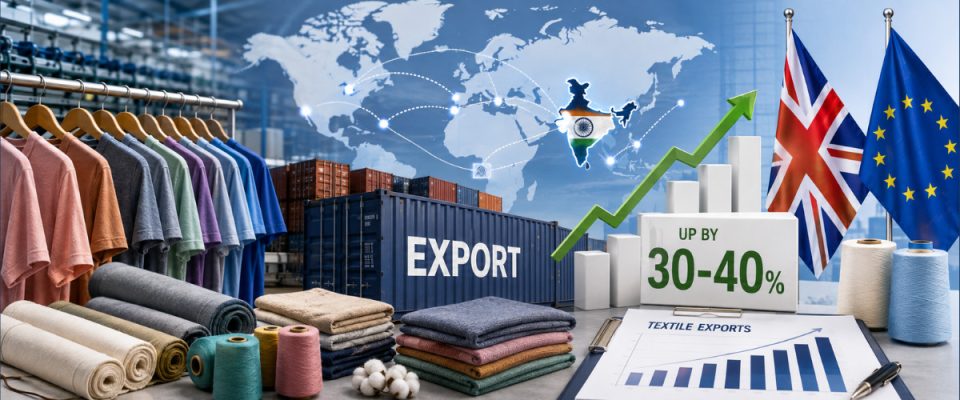
Recent trade agreements are expected to improve tariff competitiveness and create fresh export opportunities for India’s textile and apparel manufacturers over the next 15 months.
India’s textile exports to the United Kingdom and European Union could grow by 30–40% over the next 15 months, according to Sharad Jaipuria, Chairman of the Denim Manufacturers Association (DMA). The expected increase is being attributed largely to recently concluded trade agreements that are improving India’s tariff competitiveness in major Western markets.
The India–UK Comprehensive Economic and Trade Agreement (CETA) has already created significant opportunities for Indian textile and apparel exporters. The agreement provides near-zero-duty access for the vast majority of Indian exports to the UK, improving the price competitiveness of Indian products against competing sourcing destinations.
The European market is also becoming increasingly important for Indian textile manufacturers. Industry estimates suggest that India’s apparel exports to the EU could grow substantially following implementation of the India–EU trade agreement, helping address the tariff disadvantage Indian exporters have historically faced against competitors such as Bangladesh, Pakistan and Turkey.
For denim manufacturers and textile MSMEs, the agreements could provide opportunities to increase order volumes, enter new customer markets and diversify export destinations. Jaipuria expects the benefits to extend across the textile value chain as international buyers look for competitive and reliable sourcing partners.
Indian textile companies are already responding to the changing trade environment by increasing their presence in Europe and the UK. Recent industry developments indicate that manufacturers are expanding production, participating in international trade fairs and developing new customer relationships to capitalize on improving market access.
The potential export expansion could also encourage greater investment in textile manufacturing capacity, technical textiles, denim, garments, processing and value-added production. Increased demand from Europe and the UK would provide manufacturers with greater incentives to improve productivity, quality and product diversification.
The shift comes at a time when global apparel sourcing is becoming more diversified, creating opportunities for India to strengthen its position alongside established Asian textile suppliers. Industry analysts believe improved trade access could support a longer-term expansion of India’s role in global textile and apparel supply chains.
The projected 30–40% export growth therefore represents a significant opportunity for India’s textile industry, particularly for manufacturers and exporters able to combine competitive pricing with quality, sustainability and compliance requirements demanded by European and UK buyers.